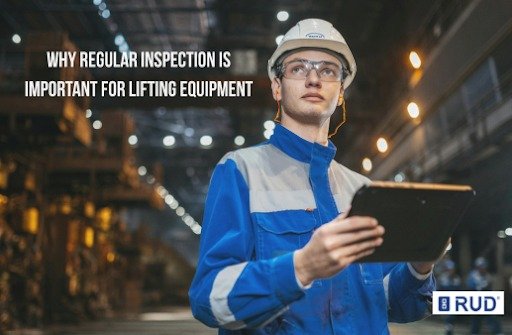
Regular inspections are important for lifting equipment since undetected faults can lead to serious injuries and costly downtime on any industrial site. Most of the time, the gear looks fine on the outside, but hidden wear can make it unsafe to use without a proper check.
And that’s exactly why having the right people in your corner is necessary. RUD Engineering has spent decades supplying, testing, and certifying lifting hardware across Brisbane and Ipswich. We provide NATA-accredited testing and a team of specialists who deal with compliant assessments every single day.
From that expertise, we’ll share:
- What inspections actually check
- Australian Standards frequency requirements
- Who’s qualified to carry them out
If lifting equipment safety is part of your job, keep reading.
What’s Checked in a Lifting Equipment Inspection?
A lifting gear evaluation covers every piece of gear involved in a lift: chain hoists, slings, shackles, harnesses, and anchor points. Each rigging type carries its own review criteria based on its construction, rated load, and working conditions.
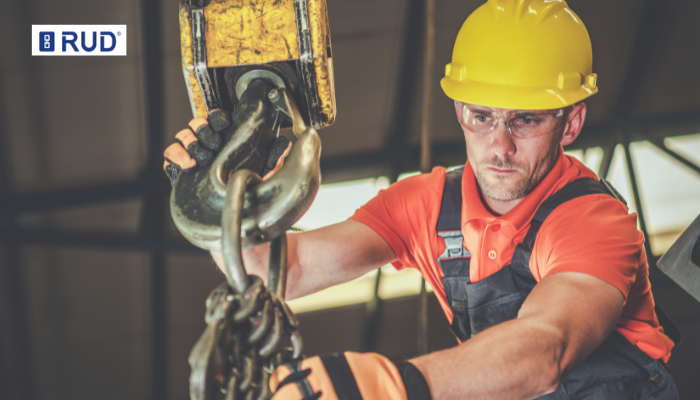
The following covers what’s usually assessed across the main lifting hardware categories:
- Chain Hoists and Lifting Devices: Inspectors measure load chain wear, hook throat opening, and brake holding capacity against rated specifications. Their WLL (Working Load Limit) tags are confirmed if they’re legible and physically intact before the hoist returns to service.
- Synthetic and Webbing Slings: UV degradation and stitching separation tend to be the silent problems here. That’s why assessors check for cuts, abrasion damage, and load rating labels that have faded beyond readability.
- Wire Rope and Alloy Chain Slings: They check for any diameter reduction that signals internal wear has progressed past safe limits. Corrosion, kinking, broken wires, and link distortion are the primary things technicians look for.
- Shackles and Rigging Hardware: Technicians verify that the throat opening has not widened under repeated load cycles and confirm that pins are secure to ensure safe operation.
- Height Safety Equipment: Harnesses, lanyards, static lines, and anchor points sit under separate Australian standards from rigging gear. So each one follows its own dedicated inspection schedule and removal criteria.
Across all of these, a missed item can put the whole lift at risk and leave the business exposed to liability if something goes wrong on the job. Even brand-new gear needs to go through the process because manufacturing faults and transit damage can happen.
How Often Do Australian Standards Require Inspections?
Assessment frequency depends on hardware type, usage intensity, and environmental conditions like heat, dust, or chemicals. Australian Standards set the minimum intervals every business has to meet, but heavy-use sites often need to go beyond those baselines.
The table below outlines the required review intervals across common lifting equipment categories under Australian Standards:
| Equipment Type | Relevant AS Standard | Inspection Frequency |
| Chain Hoists | AS 1418 | Every 12 months |
| Alloy Chain Slings | AS 3775.2 | Usage-based: 12 monthly (1–5 lifts/week) to monthly (201+ lifts/week) |
| Web & Round Slings | AS 1353 / AS 4497 | Every three months (max interval) |
| Safety Harnesses & Lanyards | AS/NZS 1891 | Every six months |
| Shackles & Wire Rope Slings | AS 2741 / AS 1666 | Based on wear and usage |
| All Lifting Equipment | AS 2550.1 | Before every use (in-service) |
Not every interval is fixed, though. For instance, alloy chain sling frequency under AS 3775.2 is tied directly to how many lifts the sling performs each week. A sling doing 201 or more cycles weekly needs monthly inspection, rather than an annual one.
For teams operating in port, mining, or construction environments, multiple standards apply at once. So cross-referencing them is part of managing the job properly. Businesses that fall short will face severe financial penalties and, in serious cases, prosecution.
Who Can Carry Out Lifting Equipment Testing Services?
Lifting equipment testing must be carried out by a “competent person,” such as a registered mechanical engineer, a NATA‑accredited lifting inspector, or a rigging specialist.
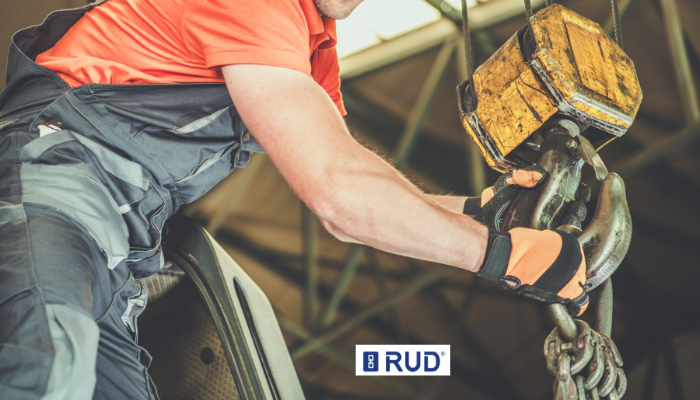
Australian Standards set clear requirements around inspector competency. Using an unqualified person to carry out formal inspections puts you at risk of compliance breaches and liability in case an incident happens on-site.
Here’s what competency, documentation, and facility repairs involve.
What “Competent Person” Means Under AS 2550.1
AS 2550.1 defines a competent person as someone with practical and theoretical knowledge sufficient to evaluate defects that affect how a gear performs. Most people assume experience on the tools is enough, but the standard requires formal training and certification to test equipment safely.
We’ve seen a Brisbane construction business find this out during an audit. Their in-house inspector held a dogging ticket, but lacked the standard-specific assessment for the slings being tested.
As a result, every assessment that person performed was unverified on paper, and the business had no compliant records to show for it.
Records, Tags, and Facility Repairs After Faults
Without a signed, dated record, there’s no proof the inspection happened. That’s why every evaluation needs:
- A written record that covers the date
- The inspector’s details
- All the findings
- When the next check is due
This documentation is what regulators and insurers ask for when something goes wrong on site.
Once faults are identified and facility repairs are completed, equipment gets re-tested and re-tagged before it returns to service. That sequence is the whole point of the process, and skipping any part of it puts the business back at square one.
Protect Your Site With the Right Inspection Services
Regular lifting equipment checks are what keep workers safe, assets in service, and your business on the right side of Australian Standards. Every piece of gear on your site carries a legal evaluation obligation that can’t be ignored.
The best way to stay ahead of it is to work with specialists who understand the standards, hold the right certifications, and handle repairs.
RUD Australia‘s team in Brisbane and Ipswich is ready to support those lifting inspection needs. Reach out today, and feel free to explore our site for more guidance on lifting safety, industry compliance, and hardware management.
Leave a Reply