Key Takeaways
- Custom thermoforming offers significant flexibility, enabling manufacturers to produce unique, detailed plastic components efficiently.
- Diverse fields, such as automotive manufacturing, medicine, agriculture, and consumer products, benefit significantly from thermoformed parts.
- Continuous improvements in sustainable materials and production technologies are expanding the range of applications for thermoforming.
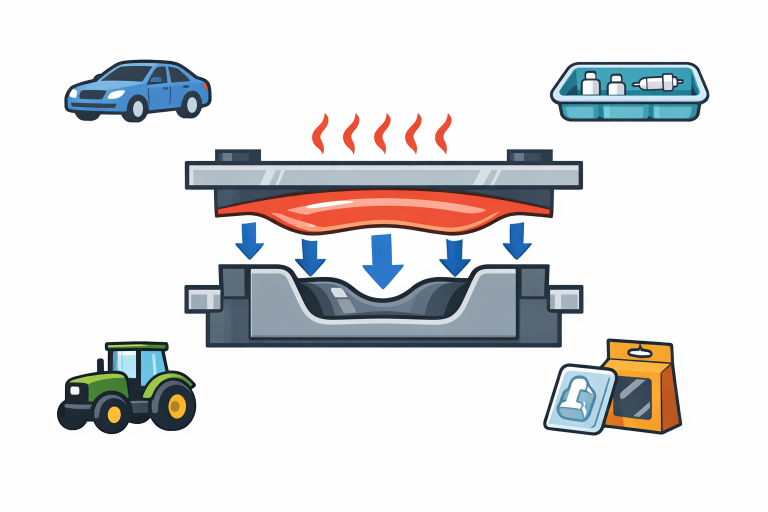
Custom thermoforming has become one of the most adaptable and efficient manufacturing methods, providing a dynamic solution for creating plastic parts used across numerous sectors. By heating plastic sheets to a malleable state and forming them over specially designed molds, manufacturers produce intricate, high-quality components with exceptional repeatability. This process is embraced by industries that demand precise, cost-effective, and scalable production options. To learn more about this technique and its potential applications, explore Plastic Thermoforming and its diverse benefits for modern manufacturing.
As technology evolves, industries seek innovative manufacturing approaches to remain agile and competitive. Thermoforming stands out due to its design flexibility, affordability, and suitability for both small and large production runs. Sectors such as automotive, healthcare, agriculture, and consumer goods are using thermoformed plastics to meet specific requirements, fostering innovation and enabling custom solutions.
Automotive Industry: Enhancing Vehicle Components
Thermoforming has taken on a strategic role in the automotive sector, where manufacturers strive to produce lighter vehicles with enhanced safety and appealing designs. It is extensively used for creating dashboard covers, interior trim panels, and trunk liners. These components must withstand daily use and exposure to sunlight and other environmental factors. The lightweight nature of thermoformed parts contributes to overall vehicle fuel efficiency, helping meet increasingly stringent regulatory standards. Furthermore, advanced molding techniques allow automotive designers the creative freedom to integrate custom textures, colors, and branding directly onto parts, maximizing both style and function.
Beyond cosmetic applications, thermoformed products are increasingly used in under-the-hood components and systems that require durability and heat resistance. For example, engine covers, HVAC housings, and battery casings are areas where custom thermoformed parts can deliver weight savings, increased design complexity, and cost-effectiveness without compromising performance. With the rise of electric vehicles, manufacturers are particularly interested in leveraging the adaptability of thermoforming to securely house sensitive electrical and battery assemblies. The continued expansion of the electric and hybrid vehicle markets presents new opportunities for innovation in thermoforming as automotive design requirements rapidly evolve.
Medical Sector: Precision and Sterility
In healthcare, strict regulation and patient safety are paramount. Thermoforming plays an important role in supplying the sector with sterile packaging for single-use instruments, device enclosures, and surgical trays. Medical-grade plastics can be thermoformed to achieve precise dimensions and tolerances needed for compatibility with sensitive equipment and regulatory requirements. This ensures reliable protection against contaminants, preserving sterility from the production line to the point of use. Moreover, custom inserts and specialized partitions can be integrated during the forming stage, providing safe, organized packaging for critical devices.
Medical device manufacturers appreciate the speed and scalability of thermoforming, especially during times of increased demand. During public health emergencies, such as disease outbreaks or natural disasters, the ability to rapidly ramp up production of custom packaging and enclosures becomes vital. Thermoforming also supports the creation of ergonomic designs for medical devices, improving ease of handling and use by healthcare professionals. As telemedicine and home healthcare devices become more prevalent, custom thermoformed plastics play an increasingly important supportive role, ensuring safety, sterility, and aesthetic appeal.
Agricultural Equipment: Durability in Harsh Environments
Modern farming relies on heavy-duty equipment capable of withstanding extreme environmental conditions. Thermoformed plastics are commonly used in protective covers, control panels, and machinery housings throughout the agriculture industry. Components made through thermoforming are resistant to impact, UV radiation, chemicals, and temperature fluctuations, making them well-suited for outdoor and industrial use. Their resilience, coupled with the ability to produce large parts without extensive tooling, makes thermoforming a cost-effective choice for agricultural applications. Longevity and durability are critical for farmers investing in equipment, and thermoformed plastics offer the reliability needed in the field.
In addition, the agricultural sector often requires rapid maintenance solutions, and thermoformed parts can be fabricated quickly to replace worn or damaged components. The versatility of the process also allows manufacturers to adapt products to specialized farming needs, whether creating housings for advanced sensors used in precision agriculture or robust containers for livestock feed and water. By leveraging custom thermoforming, agricultural businesses gain access to highly adaptable equipment solutions that help them operate more productively and efficiently year-round.
Consumer Goods: Customization and Aesthetics
In the competitive world of consumer goods, product presentation can be as influential as the product itself. Thermoforming enables companies to produce custom packaging that conforms to the exact contours and dimensions of their merchandise, resulting in both distinctive shelf appeal and optimized protection. Brands turn to this process for its flexibility in creating custom colors, shapes, embossed logos, and other branding elements. Packaging can also be engineered to minimize material use without sacrificing structural integrity, addressing both economic and sustainability motivations.
Increasingly, retailers and manufacturers are seeking packaging solutions that are both environmentally friendly and visually compelling. Custom thermoforming accommodates these priorities by allowing the inclusion of recycled resins, PCR (post-consumer recycled) plastics, or even biodegradable polymers. This not only helps companies meet regulatory requirements but also strengthens their brand’s eco-friendly image in consumers’ eyes. With quick turnaround and the option to innovate new packaging formats, thermoforming is shaping the future of consumer goods presentation in stores and online alike.
Advancements in Sustainable Materials
The ongoing shift towards responsible manufacturing has influenced the development of eco-friendly materials for thermoforming. Biodegradable plastics, recyclable polymers, and renewable-resource materials are increasingly common, reducing the environmental impact of packaging and components. Manufacturers are motivated by consumer preferences and evolving environmental regulations. By integrating sustainable materials, companies position themselves to meet demand while supporting global efforts to reduce plastic pollution and carbon emissions.
Additionally, new bio-based resins and polymer blends are being engineered for improved strength and heat resistance, making them a viable alternative for even the most demanding applications. These innovations are resulting in customized solutions that meet both performance goals and sustainability initiatives. As the costs of green materials decrease due to technological advances and larger-scale production, more manufacturers are making the shift, driving sustainability forward across the entire supply chain.
Integration with 3D Printing
Innovative manufacturers now combine thermoforming with 3D printing technologies, particularly for prototyping and small-scale production. Using 3D-printed molds accelerates design iteration and enables the creation of molds with complex or unconventional geometries that would be impractical or costly through traditional tooling. This hybrid approach streamlines the process from concept to finished part, reduces development costs, and increases manufacturing agility. For industries where rapid product cycles are key, this integration helps bring new ideas to market faster and with greater flexibility.
By uniting thermoforming with additive manufacturing, companies can create multiple prototype versions for user testing and validation, ensuring optimal functionality and market acceptance before committing to mass production. Furthermore, intricate mold surfaces produced via 3D printing can support unique aesthetic or functional features not easily achieved otherwise, elevating product development beyond conventional boundaries and spurring innovation across every sector served by thermoforming.
Conclusion
Custom thermoforming is integral to advancing modern manufacturing. Across diverse industries, it delivers quality, efficiency, and customizable solutions to complex production needs. As new materials and integrations with cutting-edge technologies emerge, thermoforming will continue to play a vital role in shaping the future of manufacturing, supporting development in established fields while opening doors to new possibilities and innovative products.
Leave a Reply