Author: William Sanchez

  • Redefining coastal luxury: how high-end travelers are uncovering the secret side of Sicily

    Redefining coastal luxury: how high-end travelers are uncovering the secret side of Sicily

    Sicily has always occupied a singular place in the Mediterranean imagination. It is an island of dramatic contrasts, where the scorched earth of the interior meets the crystalline clarity of the sea, and where the echoes of ancient Greece, Rome, and Byzantium are still audible in the bustling markets and quiet hilltop villages. For decades, the global perception of Sicilian travel was centered around the grand hotels of Taormina or the baroque splendor of Palermo. However, as we move through 2026, a new demographic of sophisticated travelers is rewriting the script. Moving away from the crowded hotspots and the predictability of traditional resorts, these explorers are seeking a “secret” side of the island—one defined by silence, architectural heritage, and an unmediated connection to the rugged coastline.

    Sicily has always occupied a singular place in the Mediterranean imagination. It is an island of dramatic contrasts, where the scorched earth of the interior meets the crystalline clarity of the sea, and where the echoes of ancient Greece, Rome, and Byzantium are still audible in the bustling markets and quiet hilltop villages. For decades, the global perception of Sicilian travel was centered around the grand hotels of Taormina or the baroque splendor of Palermo. However, as we move through 2026, a new demographic of sophisticated travelers is rewriting the script. Moving away from the crowded hotspots and the predictability of traditional resorts, these explorers are seeking a “secret” side of the island—one defined by silence, architectural heritage, and an unmediated connection to the rugged coastline.

    The modern definition of coastal luxury in Sicily has shifted from overt opulence toward a concept known as “residential immersion.” Today’s high-net-worth travelers are looking for space, not just in terms of square footage, but in the psychological sense of the word. They seek the luxury of a private horizon, where the only sound is the rhythm of the waves against the volcanic rocks or the rustle of olive trees in the sea breeze. This trend has placed a renewed focus on the island’s diverse geography, from the pristine dunes of the Vendicari Nature Reserve to the dramatic cliffs of the Zingaro, leading to a demand for stays that offer total seclusion without sacrificing the high-level services of a boutique hotel.

    The shift from hospitality to heritage residencies

    This evolution in travel habits is most evident in the way accommodation is selected. The discerning visitor no longer wants to be a guest in a shared space; they want to be a temporary resident of a storied location. This desire for privacy has fueled the market for exclusive estates that function as private observatories over the Mediterranean. Identifying the right base is a strategic decision for those who wish to explore the island’s hidden coves and baroque towns at their own pace. Often, the process begins by reviewing a hand-picked collection of properties, such as the available beach villas in Sicily on SopranoVillas, which allows travelers to secure homes that are as much a part of the landscape as the sea itself. By choosing a private residence over a traditional hotel, visitors gain the ability to curate their own environment—from private chefs sourcing ingredients in local markets to sunset yoga sessions on a terrace overlooking the Egadi Islands.

    Beyond the walls of these exclusive retreats, the “secret” side of Sicily reveals itself in the Noto Valley and the southern reaches of the island. While Noto itself has become a stylish hub for the fashion and design elite, the surrounding countryside remains a sanctuary of rural luxury. Here, historic “bagli”—fortified farmhouses—have been transformed into minimalist havens of peace. High-end travelers are increasingly drawn to this intersection of agriculture and coastline, where a morning can be spent visiting an organic vineyard on the slopes of Mount Etna and an afternoon can be dedicated to swimming in a secluded bay accessible only by boat.

    Gastronomy as an act of cultural discovery

    In Sicily, the kitchen is the heart of the home, and for the modern elite traveler, culinary exploration is the primary gateway to understanding the island’s soul. The new standard of luxury dining is no longer about white tablecloths and formal service; it is about the authenticity of the “terroir.” Private estates now often offer immersive gastronomic experiences that link the guest directly to the land. Imagine a dinner prepared by a local monzù—the traditional chefs of the Sicilian aristocracy—using ancient grains, Nero d’Avola reductions, and salt harvested from the pans of Trapani.

    This “farm-to-terrace” philosophy is what defines the Sicilian lifestyle in 2026. Travelers are seeking out artisanal producers who are reviving forgotten traditions, from the chocolate makers of Modica to the cheesemakers of the Nebrodi Mountains. These interactions provide a tangible connection to the territory, ensuring that the economic impact of high-end tourism supports the preservation of Sicily’s extraordinary biodiversity. For the sophisticated traveler, the ultimate luxury is the ability to taste a peach that was picked an hour ago or to sample an olive oil produced from trees that have stood for five centuries.

    Navigating the vertical beauty of the coastline

    Logistics play a vital role in experiencing the secret side of the island. The Sicilian coastline is a complex puzzle of limestone cliffs, sea caves, and hidden beaches. To truly escape the mass tourism that can saturate the main harbors, many now opt for private sea exploration. A private yacht or a traditional gozzo allows guests to view the island’s vertical beauty from the water—the only perspective that truly reveals the hidden architecture of the coast. From the sea, one can discover the Tonnara of Scopello without the daytime crowds or anchor in the turquoise waters of Cala Rossa in Favignana for a silent swim at dawn.

    The resilience of the Sicilian spirit, combined with an increasing focus on sustainable and respectful tourism, has allowed the island to maintain its allure while adapting to modern demands. The focus on preserving historical palazzos and protecting coastal ecosystems ensures that Sicily remains a destination of substance rather than just a backdrop for social media. In conclusion, redefining coastal luxury in Sicily is about embracing the island’s complexities. It is about finding the perfect balance between the sun-drenched intensity of the beaches and the cool, shadowed halls of a historic home. In 2026, the Amalfi Coast’s southern cousin proves that the greatest luxury is not to be seen, but to truly see and feel the ancient, vibrant pulse of a land that remains, in every sense, the heart of the Mediterranean.


  • Pulsamento: Understanding the Pulse Behind Rhythm, Music, and Human Expression

    Pulsamento: Understanding the Pulse Behind Rhythm, Music, and Human Expression

    Introduction to Pulsamento

    Pulsamento is one of those concepts that feels simple at first glance but reveals deeper layers the more you explore it. At its core, it refers to a steady pulse or underlying rhythmic heartbeat that gives structure and life to sound, movement, or even emotional expression. While the term is often associated with musical contexts, its meaning extends far beyond just beats and bars. It represents the invisible force that organizes time and energy in a way our bodies and minds naturally understand.

    When you listen to music and instinctively tap your foot, you are responding to pulsamento. It is that internal “clock” that helps humans make sense of rhythm without needing to count or analyze it. This intuitive connection is what makes pulsamento such an important idea in both artistic and scientific discussions about rhythm and perception.

    In everyday life, pulsamento is everywhere, even if we don’t label it. The rhythm of walking, the pulse of speech, the cycles of breathing—all of these reflect variations of pulsamento. It is not just a musical idea but a fundamental pattern of life itself.

    Understanding pulsamento gives us a deeper appreciation of how rhythm influences emotion, coordination, and creativity. It becomes a bridge between technical structure and natural human instinct.

    Meaning and Origins of Pulsamento

    The word “pulsamento” is derived from Latin-based linguistic roots related to “pulse” and “pulsation.” In many Romance languages, it carries the sense of something beating, throbbing, or regularly recurring. This makes it closely tied to both biological rhythms and musical timing.

    Historically, the concept developed alongside early music theory, where scholars and musicians tried to describe the invisible structure that holds rhythm together. Before modern notation systems became standardized, musicians relied heavily on feeling and collective timing, which was essentially an early form of understanding pulsamento.

    Over time, the idea expanded beyond music into broader cultural and artistic discussions. Philosophers and artists began to use it metaphorically to describe the rhythm of life, emotions, and even social behavior. In this sense, pulsamento became both a technical term and a poetic concept.

    Today, while it is not always used in formal academic writing, pulsamento still survives in artistic discussions, especially in contexts involving rhythm, improvisation, and expressive timing.

    Pulsamento in Music Theory

    In music theory, pulsamento refers to the consistent underlying beat that organizes rhythm into a structured framework. It is what allows musicians to stay in sync, whether they are playing classical compositions, jazz improvisations, or modern electronic tracks.

    This pulse is often felt rather than explicitly heard. Even when a piece of music becomes complex or syncopated, pulsamento continues to anchor the listener’s perception. It is what allows us to recognize tempo changes, groove patterns, and rhythmic variations without getting lost.

    Musicians often train themselves to internalize this pulse so deeply that it becomes second nature. This internalization is essential for ensemble performance, where multiple players must align their timing without constant verbal communication.

    Without pulsamento, music would feel disorganized and chaotic. It acts as the invisible skeleton upon which rhythm, melody, and harmony are built, giving structure to what might otherwise be sound without direction.

    Pulsamento in Rhythm and Composition

    When composers create music, pulsamento serves as a guiding framework. It helps determine how rhythms are structured, how accents are placed, and how tension and release are developed over time. Even in experimental music, where traditional meter may be absent, some form of pulsamento often still exists.

    In rhythm, pulsamento can be steady or flexible. A steady pulsamento creates predictability and stability, while a flexible one introduces variation and emotional complexity. This balance is what makes music engaging and dynamic.

    Composers often manipulate pulsamento to evoke specific feelings. A strong, consistent pulse might create a sense of confidence or urgency, while a broken or irregular pulse can create tension, mystery, or emotional unease.

    Ultimately, pulsamento in composition is not just about keeping time—it is about shaping the listener’s emotional journey through controlled rhythmic energy.

    Psychological and Emotional Impact of Pulsamento

    Humans are naturally sensitive to rhythm, and pulsamento plays a major role in how we emotionally interpret sound. Our brains are wired to detect patterns, and a steady pulse provides a sense of predictability and comfort.

    This is why rhythmic music can feel soothing or motivating. The presence of a clear pulsamento helps regulate attention and even influence mood. Studies in cognitive science suggest that rhythmic synchronization can improve focus, coordination, and emotional regulation.

    On a deeper level, pulsamento can create a sense of connection between individuals. When people move or dance in sync, their internal rhythms align, creating a shared emotional experience. This is why concerts, drumming circles, and group dancing feel so powerful.

    In this way, pulsamento is not just a musical tool—it is a psychological bridge that connects individuals through shared temporal experience.

    Pulsamento in Dance and Movement

    In dance, pulsamento becomes physically visible. It is expressed through steps, gestures, and coordinated movement that follows an underlying beat. Dancers rely on this pulse to maintain timing and express rhythm through their bodies.

    Even in improvisational dance styles, pulsamento acts as an anchor. It allows dancers to break rules creatively while still maintaining coherence with the music or group movement. Without it, choreography would lose its structure and flow.

    Different dance styles interpret pulsamento in unique ways. Some emphasize strong, rigid timing, while others focus on fluid, wave-like interpretations of rhythm. In both cases, the underlying pulse remains essential.

    Ultimately, pulsamento transforms sound into motion. It is the invisible force that connects auditory rhythm with physical expression, allowing humans to embody music rather than just hear it.

    Modern Uses in Music Production

    In modern music production, pulsamento is more important than ever. Digital audio workstations rely heavily on grid systems that represent a visual version of rhythmic pulse. Producers use these grids to align beats, samples, and effects precisely.

    Electronic music genres especially depend on strong pulsamento. Genres like techno, house, and EDM are built around repetitive, consistent beats that create hypnotic rhythmic structures. These structures rely on a clearly defined pulse to maintain energy and danceability.

    At the same time, modern producers often experiment with breaking or bending pulsamento. Techniques like tempo modulation, off-grid rhythms, and polyrhythms create complex textures that challenge traditional listening habits.

    Despite these innovations, pulsamento remains the foundation. Even the most experimental track usually returns to some form of rhythmic anchor, ensuring that listeners can still connect with the music emotionally and physically.

    How to Develop a Sense of Pulsamento

    Developing a strong sense of pulsamento is essential for musicians, dancers, and anyone interested in rhythm. The first step is active listening—paying attention not just to melody or lyrics, but to the underlying beat that holds everything together.

    Practicing with a metronome is one of the most effective ways to strengthen this skill. It trains the mind to stay consistent with an external pulse, eventually helping internal timing become more accurate and reliable.

    Another powerful method is body movement. Clapping, stepping, or tapping along with music helps connect physical motion to rhythmic structure. This reinforces the relationship between internal sensation and external sound.

    Over time, developing pulsamento becomes less about conscious effort and more about instinct. It turns into a natural ability to feel time, which is valuable in both artistic and everyday contexts.

    Common Misconceptions About Pulsamento

    One common misconception is that pulsamento is the same as a metronome beat. While they are related, pulsamento is more flexible and human than a mechanical click. It can breathe, shift, and adapt depending on expressive needs.

    Another misunderstanding is that only musicians need to understand pulsamento. In reality, it plays a role in many areas of life, including speech, movement, and even cognitive processing. Everyone uses it, whether they realize it or not.

    Some people also assume that strong pulsamento limits creativity. In fact, the opposite is true. A stable rhythmic foundation often allows for greater freedom in expression because it provides structure within which creativity can flourish.

    Recognizing these misconceptions helps deepen our appreciation of pulsamento as both a technical and natural phenomenon rather than a rigid rule.

    Conclusion

    Pulsamento is far more than just a musical term—it is a fundamental principle of rhythm that influences how we perceive, create, and respond to patterns in time. From music theory to dance, from emotional psychology to modern production, it plays a silent but powerful role in shaping human experience.

    Understanding pulsamento allows us to see rhythm not as something external, but as something deeply embedded in our bodies and minds. It connects movement, sound, and emotion into a unified experience that feels both structured and alive.

    Whether you are a musician, dancer, producer, or simply someone who enjoys music, recognizing pulsamento can completely change how you listen and feel rhythm. It turns passive listening into active awareness.

    At the end of the day, pulsamento is not just about keeping time—it is about feeling time.

  • Simpcitu: The Modern Philosophy of Digital Simplicity and Intentional Living

    Simpcitu: The Modern Philosophy of Digital Simplicity and Intentional Living

    In a world that keeps getting louder, faster, and more complicated, a new idea has started quietly gaining attention: simpcitu. At its core, simpcitu is about removing unnecessary complexity from life—especially digital life—and replacing it with clarity, intention, and ease. It’s not just another productivity trend or minimalist aesthetic; it’s a mindset shift that challenges how we interact with technology, work, and even our own thoughts.

    Simpcitu encourages people to stop treating complexity as a sign of intelligence or success. Instead, it promotes the idea that simplicity, when done right, is actually a higher form of mastery. Whether it’s your phone, your schedule, your workspace, or your mental habits, simpcitu asks a simple question: Does this actually need to be this complicated?

    Interestingly, simpcitu is not about stripping life down to the bare minimum or living in a rigid minimalist box. It’s more flexible than that. It allows you to keep what matters and remove what doesn’t, without guilt or overthinking. That balance is what makes it feel modern, realistic, and surprisingly powerful in everyday life.

    What is Simpcitu? Understanding the Concept Behind the Term

    Simpcitu can be understood as a blend of “simplicity” and a structured lifestyle philosophy. While the word itself may sound new or even abstract, the idea behind it is deeply rooted in human behavior: people function better when their environment is clear, organized, and free from unnecessary noise. Simpcitu takes this idea and applies it specifically to modern digital and mental overload.

    At its foundation, simpcitu is about reducing friction. That means reducing the mental effort required to make decisions, navigate tools, or manage daily tasks. In a simpcitu-driven lifestyle, everything has a purpose, and everything unnecessary is questioned. This doesn’t mean removing everything—it means refining everything until it serves you instead of draining you.

    Another important aspect of simpcitu is intentionality. Unlike chaos-driven living, where people react to notifications, trends, and external pressure, simpcitu encourages proactive control. You decide what enters your space, what deserves your attention, and what simply doesn’t. This creates a more grounded, stable experience of daily life, especially in an age where distractions are endless.

    The Core Principles of Simpcitu: Clarity, Minimal Friction, and Purpose

    One of the strongest pillars of simpcitu is clarity. Clarity means understanding exactly what you are doing, why you are doing it, and whether it actually aligns with your goals. In a simpcitu-based mindset, confusion is seen as a signal—not something to ignore, but something to fix. If something feels mentally cluttered, it is redesigned until it becomes simple and understandable.

    Clarity in simpcitu also applies to digital environments. Think about your phone, your apps, your files, or even your browser tabs. Simpcitu encourages you to design these spaces in a way that reduces cognitive overload. Instead of having 50 apps you barely use, you keep only what supports your daily life. Instead of complex workflows, you build systems that feel natural and effortless.

    The second principle is minimal friction. Friction refers to anything that slows you down unnecessarily—extra steps, confusing interfaces, or mental hesitation. Simpcitu tries to eliminate that. When friction is reduced, action becomes easier, and productivity naturally increases without forcing discipline.

    The third principle is purpose. Everything in a simpcitu lifestyle must have a reason to exist. If something doesn’t serve a clear purpose, it either gets removed or redesigned. This principle applies not only to physical and digital spaces but also to habits, commitments, and even relationships. Simpcitu asks: Is this adding value or just filling space?

    Simpcitu in Digital Life: Reclaiming Control in a Distracted World

    Digital life is where simpcitu becomes especially powerful. Most people today are overwhelmed by apps, notifications, emails, social media platforms, and endless streams of content. Simpcitu offers a way to regain control without completely disconnecting from technology.

    In a simpcitu-oriented digital setup, your devices are intentionally designed for focus rather than distraction. This might mean turning off non-essential notifications, organizing your home screen, or using tools that prioritize simplicity over feature overload. The goal is not to reject technology but to reshape it into something that works for you instead of against you.

    Social media is another major area where simpcitu plays a role. Instead of endlessly scrolling through irrelevant content, simpcitu encourages curated consumption. You choose who you follow, what you engage with, and how much time you spend. This transforms social media from a passive habit into a controlled, intentional activity.

    Even work tools and productivity systems benefit from simpcitu. Instead of using overly complicated apps with dozens of features you never touch, you focus on clean, efficient tools that help you complete tasks without distraction. This not only improves output but also reduces mental fatigue throughout the day.

    The Psychological Benefits of Simpcitu: A Calmer and Clearer Mind

    One of the most underrated benefits of simpcitu is its impact on mental health. When your environment is cluttered—both digitally and physically—your brain is constantly processing unnecessary information. This leads to fatigue, stress, and a feeling of being overwhelmed even when nothing major is happening.

    Simpcitu helps reduce cognitive load. Cognitive load refers to the amount of mental effort required to process information and make decisions. By simplifying your environment, simpcitu frees up mental space, allowing you to think more clearly and focus on what actually matters.

    Another major benefit is reduced anxiety. A chaotic environment often creates a subtle but constant sense of pressure. You may not always notice it consciously, but your mind is always “on alert.” Simpcitu removes many of these triggers by creating order and predictability in your surroundings.

    Finally, simpcitu improves emotional stability and satisfaction. When life is less cluttered, you are less likely to feel overwhelmed or distracted. This creates a calmer internal state where you can enjoy experiences more fully instead of constantly jumping from one thing to another. Over time, this leads to a more grounded and balanced lifestyle overall.

    How to Practice Simpcitu in Everyday Life: Simple Changes with Big Impact

    Practicing simpcitu doesn’t require a complete life overhaul. In fact, its strength lies in small, consistent changes. One of the easiest places to start is your digital environment. Organizing your phone, deleting unused apps, and simplifying your notifications can instantly reduce mental noise and improve focus.

    Another practical step is simplifying your routines. Many people create overly complex morning or work routines that are hard to maintain. Simpcitu encourages you to strip these down to their essentials. A good routine is not the one with the most steps, but the one you can actually stick to without stress.

    Your physical environment also plays a big role. A cluttered room often leads to a cluttered mind. Practicing simpcitu here might mean keeping only what you use regularly, organizing your workspace, or simply creating clean, open areas that help you think better. The goal is not perfection, but functionality and peace.

    The Future of Simpcitu: A Shift Toward Intentional Living

    As digital complexity continues to grow, the principles of simpcitu are likely to become even more relevant. People are beginning to realize that more features, more apps, and more information do not always equal better living. In many cases, they lead to confusion, burnout, and decision fatigue.

    The future of simpcitu may involve more intentional design in technology itself. Apps and platforms could become simpler, more focused, and more aligned with human attention limits. Instead of competing for engagement at all costs, they may shift toward supporting healthier usage patterns.

    On a personal level, simpcitu is likely to evolve into a mainstream lifestyle choice. Just like minimalism gained popularity over the last decade, simpcitu could represent the next phase—one that focuses not only on physical simplicity but also on digital and mental clarity. It’s less about owning less and more about experiencing more with less interference.

    If there’s one thing simpcitu teaches, it’s that complexity is not always a sign of progress. Sometimes, the most advanced systems are the ones that feel the simplest to use. And in a world that rarely slows down, choosing simplicity might just be the most powerful decision you can make.

  • Droven IO Cybersecurity Updates: Staying Ahead in a Rapidly Changing Digital World

    Droven IO Cybersecurity Updates: Staying Ahead in a Rapidly Changing Digital World

    Cybersecurity is no longer a concern only for large corporations and government agencies. Every business, organization, and individual connected to the internet faces potential cyber threats daily. As digital risks continue to evolve, staying informed about the latest security developments has become essential. This is where Droven IO Cybersecurity Updates play an important role, helping technology professionals, businesses, and security-conscious users remain aware of emerging threats and defensive strategies.

    In today’s connected environment, cyberattacks can disrupt operations, compromise sensitive information, and damage reputations within minutes. Reliable cybersecurity information helps organizations prepare for challenges before they become costly incidents. The growing interest in Droven IO Cybersecurity Updates reflects the increasing need for trustworthy security insights and practical guidance.

    Why Cybersecurity Updates Matter

    The cybersecurity landscape changes constantly. New vulnerabilities are discovered every day, while cybercriminals continuously develop more sophisticated attack methods. Security updates provide valuable information about newly identified risks, software vulnerabilities, data breaches, malware campaigns, and recommended protection measures.

    Businesses that fail to stay informed often become vulnerable to attacks that could have been prevented through timely action. Security awareness allows organizations to patch systems, improve defenses, train employees, and strengthen overall resilience against cyber threats.

    This is why platforms and resources that share cybersecurity intelligence have become increasingly important. Droven IO Cybersecurity Updates contribute to this broader effort by helping users understand current security trends and developments.

    The Growing Threat Environment

    Over the past decade, cyber threats have expanded significantly. Attackers now target businesses of all sizes rather than focusing solely on large enterprises. Small and medium-sized organizations frequently become victims because they often lack dedicated security teams and advanced protective measures.

    Ransomware attacks continue to affect healthcare providers, educational institutions, financial organizations, and private companies. Phishing campaigns have become more convincing, often using artificial intelligence and social engineering techniques to deceive victims. Cloud security concerns have also increased as more organizations move critical operations online.

    By following trusted resources such as Droven IO Cybersecurity Updates, organizations can better understand these evolving risks and implement stronger security practices.

    Understanding Modern Cybersecurity Challenges

    One of the biggest challenges facing security professionals today is the sheer speed at which threats evolve. Traditional security approaches are no longer sufficient on their own. Modern cybersecurity requires continuous monitoring, proactive defense strategies, and regular updates.

    Organizations must protect multiple attack surfaces, including employee devices, cloud environments, mobile applications, and remote work infrastructure. Every connected device represents a potential entry point for attackers.

    The information shared through Droven IO Cybersecurity Updates can help users stay informed about these changing attack methods and learn how organizations are adapting their defenses.

    The Importance of Threat Intelligence

    Threat intelligence has become a critical component of cybersecurity programs worldwide. It involves collecting, analyzing, and sharing information about potential threats and attacker behavior.

    Effective threat intelligence helps organizations identify risks before they become major incidents. Security teams can use this information to strengthen defenses, prioritize vulnerabilities, and improve incident response capabilities.

    When cybersecurity updates provide timely intelligence regarding emerging threats, businesses gain valuable opportunities to prepare and reduce potential damage. This practical value explains why many professionals regularly follow resources like Droven IO Cybersecurity Updates.

    Cybersecurity Best Practices for Organizations

    Strong cybersecurity requires more than simply installing antivirus software. Modern protection depends on a comprehensive approach that combines technology, policies, employee awareness, and ongoing monitoring.

    Organizations should maintain regular software updates to reduce exposure to known vulnerabilities. Multi-factor authentication adds an additional layer of protection against unauthorized access. Employee training remains equally important because human error continues to be one of the leading causes of security incidents.

    Regular security assessments help identify weaknesses before attackers discover them. Backup systems should also be tested frequently to ensure business continuity in the event of ransomware or system failures.

    The insights often discussed through Droven IO Cybersecurity Updates align with these widely recognized security practices, helping organizations build stronger defenses against modern threats.

    The Role of Artificial Intelligence in Cybersecurity

    Artificial intelligence is transforming both cyber defense and cybercrime. Security professionals increasingly use AI-powered tools to detect unusual activity, identify threats, and automate response processes. These technologies help security teams analyze large amounts of data more efficiently than traditional methods.

    At the same time, attackers are using AI to create more convincing phishing emails, automate attacks, and bypass conventional defenses. This ongoing competition between attackers and defenders makes cybersecurity updates even more important.

    Following trusted information sources allows organizations to understand how AI influences the threat landscape and how they can use emerging technologies responsibly.

    Cloud Security Continues to Evolve

    Cloud computing has become a fundamental part of modern business operations. While cloud services offer flexibility and scalability, they also introduce new security challenges.

    Misconfigured cloud environments remain a common cause of data exposure. Access management, encryption, monitoring, and compliance controls play important roles in protecting cloud-based systems.

    As cloud adoption grows, discussions within Droven IO Cybersecurity Updates often highlight security considerations that organizations should evaluate when managing cloud infrastructure.

    The Human Element in Cybersecurity

    Technology alone cannot eliminate cybersecurity risks. Employees remain one of the most important components of any security strategy. Attackers frequently target individuals through phishing emails, fraudulent messages, and social engineering techniques.

    Creating a strong security culture helps organizations reduce these risks. Employees should understand how to recognize suspicious activity, report incidents, and follow security policies consistently.

    Regular awareness training significantly improves an organization’s ability to prevent cyber incidents. Combined with technical safeguards, informed employees become an effective line of defense.

    Preparing for Future Cyber Threats

    The future of cybersecurity will likely involve increasingly sophisticated threats, greater automation, and expanded digital ecosystems. Organizations must prepare for challenges involving artificial intelligence, connected devices, supply chain vulnerabilities, and advanced ransomware campaigns.

    Cyber resilience will become just as important as cyber prevention. Rather than assuming attacks can always be stopped, organizations must develop strategies for rapid detection, containment, recovery, and continuous improvement.

    Resources such as Droven IO Cybersecurity Updates can help businesses stay informed about future developments and adapt their security strategies accordingly.

    Building a Long-Term Security Mindset

    Cybersecurity should be viewed as an ongoing process rather than a one-time project. Threats evolve continuously, requiring organizations to review and improve their defenses regularly.

    Successful security programs focus on prevention, detection, response, and recovery. They combine technology investments with employee education and leadership support. Organizations that prioritize cybersecurity as a long-term commitment are generally better equipped to handle unexpected challenges.

    Maintaining awareness through reliable sources and industry updates helps ensure that security decisions remain informed and effective.

    Read More Articles: JoinMyQuiz

    FAQ

    What are Droven IO Cybersecurity Updates?
    Droven IO Cybersecurity Updates refer to cybersecurity-related information, insights, and developments that help users stay informed about emerging threats, vulnerabilities, and security best practices.

    Why are cybersecurity updates important?
    Cybersecurity updates provide timely information about new risks, software vulnerabilities, and security improvements, allowing organizations to strengthen their defenses and reduce potential threats.

    How often should organizations review cybersecurity information?
    Organizations should monitor cybersecurity developments regularly because threats evolve continuously. Many security teams review updates daily or weekly depending on their operational requirements.

    Can small businesses benefit from cybersecurity updates?
    Yes. Small businesses are increasingly targeted by cybercriminals and can greatly benefit from staying informed about current threats and recommended security measures.

    What are the biggest cybersecurity risks today?
    Common risks include ransomware attacks, phishing campaigns, data breaches, cloud security misconfigurations, insider threats, and vulnerabilities in connected devices.

    How can businesses improve cybersecurity awareness?
    Regular employee training, security simulations, clear policies, and continuous education help build stronger cybersecurity awareness across an organization.

    Conclusion

    Cybersecurity continues to be one of the most important challenges facing organizations in the digital age. As threats become more advanced and interconnected systems grow increasingly complex, staying informed is essential for protecting sensitive information and maintaining operational stability.

    Droven IO Cybersecurity Updates serve as a valuable source of information for individuals and organizations seeking to understand the latest developments in digital security. By following trusted cybersecurity updates, implementing strong security practices, and fostering a culture of awareness, businesses can significantly improve their ability to manage cyber risks.

    In a world where cyber threats evolve every day, knowledge remains one of the most effective forms of protection. Staying current with Droven IO Cybersecurity Updates can help organizations make smarter security decisions and remain prepared for the challenges ahead.

  • Esports News DualMedia: The Future of Gaming Updates and Competitive Entertainment

    Esports News DualMedia: The Future of Gaming Updates and Competitive Entertainment

    The world of competitive gaming is changing faster than ever, and Esports News DualMedia has become an important topic for fans who want reliable updates, tournament coverage, player stories, and industry insights. Esports is no longer just a hobby for gamers; it has developed into a global entertainment industry with professional teams, international events, and millions of viewers.

    With new games, rising players, and major competitions happening every year, staying informed has become a major part of the esports experience. Fans now expect quick, accurate, and engaging coverage that explains not only what happened but also why it matters. Platforms focused on esports reporting help audiences understand the competitive scene beyond simple match results.

    The Growth of Esports

    Esports has grown from small gaming communities into a worldwide competitive ecosystem. Games such as League of Legends, Counter-Strike 2, and Dota 2 have created professional leagues where players train like traditional athletes.

    The popularity of esports comes from its combination of skill, teamwork, strategy, and entertainment. Professional players spend countless hours improving their abilities, studying opponents, and developing new techniques. This dedication has helped esports gain recognition among younger audiences and mainstream media.

    Modern esports events attract large online audiences and create communities where fans discuss strategies, follow players, and support their favorite teams. Because the industry moves quickly, news platforms play a key role in keeping fans connected.

    Why Esports News Matters

    For many fans, esports news is more than just reading about winners and losers. It is about understanding the stories behind the competition. A good esports report covers player performances, team changes, tournament preparation, game updates, and the challenges faced by professional competitors.

    Esports News DualMedia represents the idea of combining different forms of coverage to deliver a complete experience. Instead of focusing only on headlines, modern esports reporting often includes analysis, interviews, videos, and community discussions.

    This approach helps both casual viewers and dedicated fans follow the industry more easily. Someone new to esports can learn about teams and competitions, while experienced fans can explore deeper analysis of gameplay and strategies.

    The Role of Digital Platforms

    Digital platforms have transformed how people consume esports content. In the past, fans depended mostly on event broadcasts or gaming forums. Today, esports information is available instantly through websites, social platforms, livestreams, and online communities.

    The speed of digital media allows fans to follow competitions happening anywhere in the world. A tournament in one country can attract viewers globally within minutes. News platforms must balance speed with accuracy because incorrect information can quickly spread online.

    A trusted esports source focuses on verifying information, providing context, and helping readers understand the bigger picture. This creates a stronger connection between fans, players, and organizations.

    Stories Behind the Players

    One of the most interesting parts of esports coverage is the human side of competition. Professional players are not only competitors; they are individuals with unique journeys, challenges, and achievements.

    Many esports athletes begin playing games casually before discovering a path into professional competition. Their stories often include years of practice, difficult losses, and moments of success that inspire new players.

    Good esports journalism highlights these personal experiences. It shows the effort behind the victories and helps fans appreciate the dedication required to compete at the highest level.

    The Business of Competitive Gaming

    Esports has also become a major business sector. Organizations, sponsors, event companies, and game developers all contribute to the growth of competitive gaming.

    Large tournaments create opportunities for advertising, partnerships, and careers beyond playing. Coaches, analysts, content creators, event managers, and commentators all have important roles in the esports industry.

    As esports continues to expand, news coverage helps audiences understand these developments. Reports about sponsorships, team investments, and industry trends show how gaming has become a serious professional field.

    Technology and the Future of Esports Coverage

    Technology continues to influence how fans experience esports. Improvements in streaming, online communities, and interactive content have changed the relationship between viewers and competitions.

    Fans can now watch live matches, communicate with other viewers, and access detailed statistics during events. This creates a more immersive experience compared with traditional sports viewing.

    The future of Esports News DualMedia will likely involve even more creative ways to combine information and entertainment. New technologies may bring better analysis, improved broadcasts, and deeper connections between fans and esports communities.

    Challenges in Esports Reporting

    Although esports is growing, covering it comes with challenges. The industry changes quickly, with frequent updates, roster changes, game patches, and shifting competitive trends.

    Reliable reporting requires understanding the games, the players, and the communities involved. A simple announcement may have a much deeper impact on a team’s future or a player’s career.

    Responsible esports coverage avoids unnecessary rumors and focuses on verified information. This builds trust between news platforms and their audiences.

    Building a Better Fan Experience

    A strong esports news platform does more than share information. It creates a space where fans can learn, discuss, and celebrate competitive gaming.

    Esports News DualMedia highlights the importance of connecting different types of content to create a complete fan experience. Articles, interviews, match discussions, and expert opinions can work together to make esports more understandable and enjoyable.

    As the audience continues to grow, quality coverage will become even more important. Fans want information that feels authentic, detailed, and connected to the real world of competitive gaming.

    The Future of Esports Journalism

    The future of esports journalism looks promising as more people recognize gaming as a major form of entertainment. Young audiences especially rely on digital platforms for their news, making esports reporting an important part of modern media.

    Future coverage may focus more on storytelling, deeper analysis, and interactive experiences. Instead of simply reporting events, journalists will continue exploring the culture, personalities, and technology that shape esports.

    The growth of esports proves that competitive gaming is not just a temporary trend. It is a constantly developing industry with its own history, communities, and global influence.

    Read More Articles: Puzutask Com

    Frequently Asked Questions

    What is Esports News DualMedia?
    Esports News DualMedia refers to esports-focused coverage that combines different types of media and information to provide fans with updates, analysis, stories, and entertainment related to competitive gaming.

    Why do people follow esports news?
    People follow esports news to stay updated on tournaments, teams, players, game changes, and important developments in the gaming industry.

    Is esports considered a professional career?
    Yes, esports has become a professional field with players, coaches, analysts, commentators, and many other career opportunities.

    How does esports news help fans?
    Esports news helps fans understand competitions better by explaining events, strategies, player performances, and industry changes.

    Will esports continue growing in the future?
    Esports is expected to continue developing as technology improves and more people become interested in competitive gaming.

    Conclusion

    The rise of competitive gaming has created a new world of entertainment, competition, and digital storytelling. Esports News DualMedia reflects the changing way fans connect with esports through detailed coverage, modern platforms, and engaging content.

    As teams compete, players create new achievements, and technology continues to evolve, esports will remain an exciting industry to follow. Reliable coverage will continue to play an important role in helping fans understand the games they love and the people behind the competition.

  • Puzutask Com: Understanding the Platform, Features, and Online Experience

    Puzutask Com: Understanding the Platform, Features, and Online Experience

    In the growing digital world, people are constantly searching for platforms that can make their daily online tasks easier and more organized. Puzutask com has gained attention among users who want to explore a modern digital solution for managing different activities. Whether someone is looking for productivity support, task-related tools, or a smoother online experience, understanding what a platform offers before using it is always important.

    The internet is filled with countless websites and services, but not every platform provides the same level of reliability, usability, and value. This detailed guide explores the concept behind Puzutask com, its possible uses, user experience, important considerations, and what people should know before interacting with any online platform.

    What Is Puzutask Com?

    Puzutask com is a name that has attracted curiosity from internet users who are interested in digital task management and online productivity solutions. The idea behind platforms with task-focused names is usually centered around helping users complete activities more efficiently through digital tools and organized systems.

    Modern users often depend on online platforms to manage schedules, improve workflow, and simplify repetitive activities. A platform like this may appeal to students, professionals, creators, and everyday internet users who want a more structured way to handle online responsibilities.

    Before using any unfamiliar website, users should always take time to understand its purpose, features, privacy approach, and overall reputation. A clear understanding helps people make better decisions and avoid unnecessary online risks.

    The Importance of Digital Task Platforms

    Technology has changed the way people manage their work and personal responsibilities. In the past, people relied heavily on handwritten notes, calendars, and manual reminders. Today, digital tools allow users to organize information, track progress, and manage tasks from almost anywhere.

    Platforms related to productivity can help users save time and maintain better organization. They can be especially useful for people who handle multiple responsibilities at the same time.

    A well-designed task platform should focus on simplicity. Users generally prefer tools that are easy to understand, work smoothly, and do not create unnecessary complications. This is why online services continue to improve their interfaces and features to match user expectations.

    How Puzutask Com May Help Users

    The main attraction of Puzutask com comes from the idea of simplifying digital activities. Users are increasingly looking for online solutions that reduce confusion and help them complete tasks more effectively.

    A useful digital platform usually focuses on accessibility, allowing users to interact with features without needing advanced technical knowledge. A clean experience can make a major difference because people often leave websites that feel complicated or difficult to navigate.

    When exploring a platform, users should look for important qualities such as easy navigation, clear information, secure browsing, and transparent communication. These factors create confidence and improve the overall experience.

    User Experience and Accessibility

    A strong online experience is not only about having many features. The way users interact with a platform matters just as much. A website should load properly, provide understandable options, and allow visitors to complete their goals without unnecessary steps.

    Puzutask com represents the type of online service that users may evaluate based on convenience and functionality. A positive user experience depends on how well the platform solves real problems and whether it provides meaningful value.

    Accessibility is another important factor. People access websites from different devices, including smartphones, tablets, and computers. Platforms that consider different screen sizes and user needs generally provide a better experience.

    Safety and Trust Considerations

    Whenever users visit a new website, safety should remain a priority. Not every online platform has the same standards, so users should carefully review basic trust signals before sharing personal information or creating accounts.

    A trustworthy website should communicate clearly about its purpose and provide information about how user data is handled. Privacy policies, contact details, and transparent terms can help users understand whether a platform is responsible with information.

    People searching for Puzutask com or similar online services should avoid entering sensitive details unless they feel confident about the platform. Responsible browsing habits are important for maintaining online security.

    Why Online Research Matters

    Before committing to any digital service, research can save users from future problems. Reading available information, checking user feedback, and understanding the platform’s purpose can provide valuable insight.

    Many websites appear attractive at first glance, but long-term reliability depends on factors beyond appearance. A platform should offer consistent performance, clear communication, and a useful experience.

    The best approach is to stay informed. Users who take time to evaluate online services usually make smarter choices and enjoy safer digital experiences.

    The Future of Digital Productivity Tools

    The demand for online productivity solutions continues to grow. As technology advances, more platforms are focusing on automation, organization, and personalized experiences.

    Future digital tools may become more intelligent by helping users manage tasks, reduce manual work, and improve efficiency. The goal of these platforms is to make everyday activities simpler.

    Services like Puzutask com fit into a larger trend where people expect technology to support their daily routines. The success of any platform depends on how well it understands user needs and delivers practical solutions.

    A Balanced View of Puzutask Com

    Every online service has strengths and areas that users should evaluate. A platform’s value depends on what someone needs from it. Some users may find certain features helpful, while others may prefer different tools.

    The most important thing is matching a platform with personal requirements. A user looking for organization, convenience, and digital assistance should carefully explore available options before making a decision.

    Puzutask com is part of the broader digital environment where users continue searching for smarter ways to handle online tasks. Understanding how such platforms work allows people to choose more confidently.

    Final Thoughts

    The online world continues to introduce new platforms designed to improve productivity and simplify everyday activities. Puzutask com represents the growing interest in digital solutions that help users manage tasks more efficiently.

    A good online experience depends on usability, transparency, security, and real value. Users should always explore platforms carefully, understand their purpose, and protect their personal information.

    As digital habits continue to change, task-focused platforms will likely remain an important part of modern life. Making informed choices helps users get the most benefit from technology while maintaining a safer online experience.

    Read More Articles: Droven IO Cybersecurity Updates

    Frequently Asked Questions

    What is Puzutask Com used for?
    Puzutask com is associated with the idea of digital task management and online productivity. Users interested in such platforms usually explore them to improve organization and make online activities easier to handle.

    Is Puzutask Com safe to use?
    Safety depends on how the platform operates and how users interact with it. Visitors should review available information, avoid sharing unnecessary personal details, and make sure they trust a website before using its services.

    Why are task management platforms becoming popular?
    Task management platforms are becoming popular because people want easier ways to organize responsibilities. Digital tools provide convenience by helping users manage information and activities from different devices.

    How should users evaluate a new website?
    Users should check a website’s purpose, transparency, security information, and overall reputation. Careful research before using an unfamiliar platform helps create a safer online experience.

    Can digital platforms improve productivity?
    Yes, digital platforms can support productivity by helping users organize work, track activities, and reduce unnecessary manual processes. Their effectiveness depends on how well they match individual needs.

    Conclusion

    In a world where digital tools continue to shape daily routines, platforms focused on organization and efficiency have become increasingly valuable. Puzutask com highlights the growing demand for online solutions that make tasks simpler and more manageable. By staying informed and choosing platforms carefully, users can enjoy a better and more secure digital journey.

  • How a Free Mockup Can Help You Identify the Weakest Part of Any Design Instantly

    How a Free Mockup Can Help You Identify the Weakest Part of Any Design Instantly

    There’s a moment every designer knows well. You’ve been staring at your work for hours, tweaking typography, nudging margins, second-guessing color choices — and somewhere around hour three, your eyes stop seeing it clearly. The design looks fine. Maybe even great. But “looks fine on a blank canvas” and “looks great in the real world” are two very different things.

    This is exactly where mockups change everything.

    Why Context Reveals What Isolation Hides

    Flat design files are liars. Not intentionally — they simply lack the environmental pressure that exposes real weaknesses. Place a logo on a white artboard, and you’ll never notice that the stroke weight is too thin for embroidery. Present a packaging label in isolation, and the color contrast issue won’t surface until someone holds the physical bottle under store lighting.

    Mockups force your design into context. Suddenly, that button label is sitting on an actual smartphone screen. That poster is hanging on a concrete wall with shadows falling across it. Your brain shifts from “creator mode” to “viewer mode” — and viewer mode is brutally honest.

    The weaknesses don’t hide anymore. They volunteer themselves.

    What Breaks First (And Why That’s Useful)

    When you drop a design into a realistic scene, specific problems tend to surface in a predictable order:

    • Hierarchy collapses — elements that felt balanced in isolation start competing with each other visually when surrounded by real-world texture and depth
    • Scale becomes obvious — a headline that seemed bold enough suddenly reads as timid on a billboard mockup, or overwhelming on a business card
    • Color relationships shift — warm paper tones, screen glare, or surface reflection can make your palette look completely different than intended

    None of this is failure. It’s intelligence. Every problem the mockup reveals is a problem you’re solving before the client, the printer, or the customer encounters it.

    Real-World Applications: Mockups in Practice

    The practical value of mockups isn’t theoretical — designers across disciplines use them daily to make faster, smarter decisions.

    A brand identity designer working on a café rebrand used a coffee cup mockup to discover that the logomark she’d designed was too detailed to read at small sizes. The flat file looked sharp. The mockup told the truth in thirty seconds.

    A packaging designer testing label concepts for a skincare line ran six color variations through bottle mockups before the client call. What started as a “pick your favorite” conversation turned into a data-informed decision — two options that looked similar on screen looked dramatically different on frosted glass.

    A UI/UX designer preparing a mobile app presentation used device mockups to catch an inconsistent padding issue across screen sizes that had survived three internal reviews. The moment it was placed on a realistic phone screen, the misalignment was impossible to unsee.

    Even freelancers pitching cold use mockups strategically — presenting concepts in context signals professionalism and helps clients visualize the outcome rather than interpret abstract files.

    Free Mockups on ls.graphics

    ls.graphics is one of the most respected names in the mockup space, and their free collection delivers quality that rivals paid alternatives. The Free mockups on the platform feature ultra-realistic rendering, organized layers, multiple angles, and color style variations — all wrapped in clean, minimalistic compositions. The Edit Online feature lets you preview concepts directly in the browser without heavy desktop software. With a large number of free scenes spanning packaging, devices, apparel, and branding, it’s a serious working toolkit, not a sample tray.

    The Shift in How You Evaluate Design

    Once mockups become part of your regular workflow, your internal evaluation process changes. You stop asking “does this look good?” in the abstract and start asking “does this work here, in this context, for this person?”

    That’s a more sophisticated question. And it produces better design.

    The gap between a design that looks polished in a file and one that performs in the real world is almost always visible in a mockup — if you’re willing to look honestly at what you see.

    Conclusion

    The strongest design process isn’t the one with the most steps — it’s the one with the best feedback loops. Mockups are one of the most efficient feedback mechanisms available, and accessible tools like ls.graphics have made that advantage available to designers at every level. Use them early, use them often, and let the context tell you what your eye has learned to overlook.

  • High Quality Image Converter: The Ultimate Solution for Better Image Formats

    High Quality Image Converter: The Ultimate Solution for Better Image Formats

    In today’s digital world, images play a vital role in communication, marketing, education, and entertainment. Whether you are a professional photographer, graphic designer, blogger, student, or business owner, you often need to convert images from one format to another. A high quality image converter is a powerful tool that helps users transform image files while preserving their original clarity, color accuracy, and resolution.

    What Is a High Quality Image Converter?

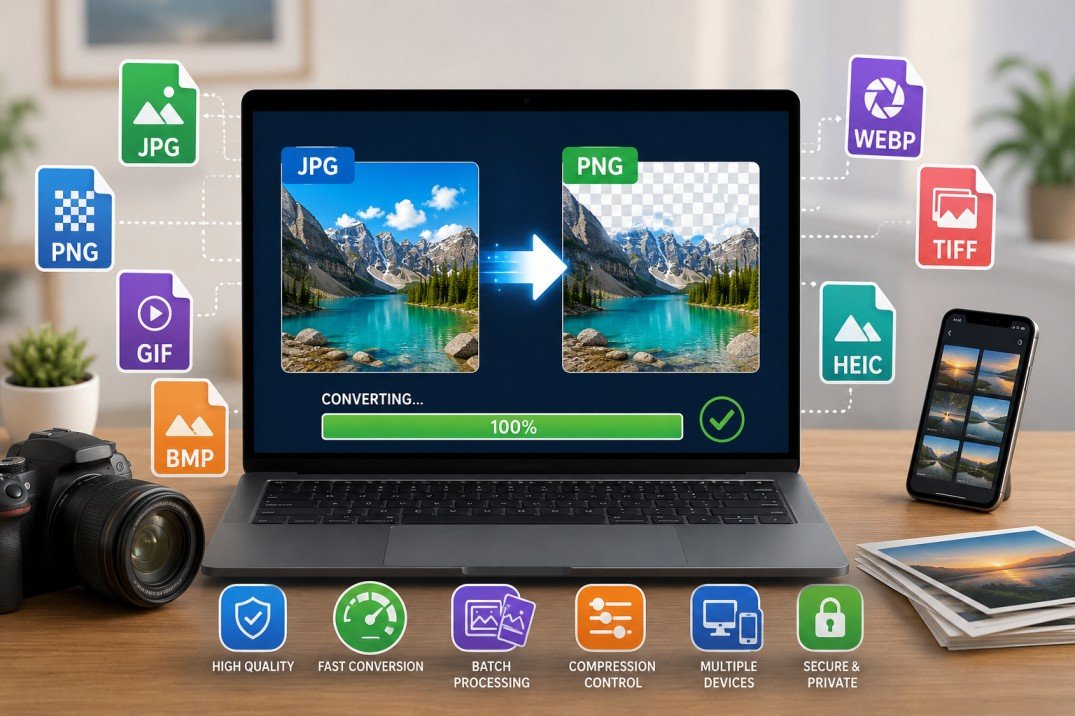
    A high quality image converter is a software application or online tool designed to change image formats without significantly reducing image quality. It allows users to convert files such as JPG, PNG, WEBP, GIF, BMP, TIFF, and other formats according to their needs.

    Unlike basic conversion tools that may compress images excessively, a high quality image converter ensures that the converted file retains sharp details, vibrant colors, and proper dimensions. This makes it suitable for both personal and professional use.

    Why Image Conversion Is Important

    Different image formats serve different purposes. For example:

    • JPG is ideal for photographs and web use.
    • PNG supports transparent backgrounds.
    • WEBP offers smaller file sizes with excellent quality.
    • GIF is commonly used for simple animations.
    • TIFF is preferred for professional printing and editing.

    Sometimes users need to convert images to ensure compatibility with websites, social media platforms, software applications, or printing services. A high quality image converter makes this process quick and efficient.

    Key Features of a High Quality Image Converter

    1. Quality Preservation

    The most important feature is maintaining image quality during conversion. Advanced converters use sophisticated algorithms to minimize quality loss and preserve fine details.

    2. Multiple Format Support

    A good converter supports a wide range of formats, allowing users to switch between different file types effortlessly.

    3. Fast Processing Speed

    Modern converters can process images within seconds, even when handling large files or multiple images simultaneously.

    4. Batch Conversion

    Many high quality image converters allow users to convert multiple images at once, saving valuable time and effort.

    5. User-Friendly Interface

    An intuitive interface ensures that even beginners can convert images without technical knowledge or experience.

    6. Compression Control

    Some converters provide options to adjust compression levels, enabling users to balance image quality and file size according to their requirements.

    Benefits of Using a High Quality Image Converter

    Using a high quality image converter offers several advantages:

    Improved Compatibility

    Different devices and platforms support different image formats. Conversion ensures smooth compatibility across systems.

    Reduced File Size

    Converting images to optimized formats can significantly reduce storage requirements and improve website loading speeds.

    Better Performance

    Smaller image files enhance user experience by reducing download times and improving website performance.

    Professional Results

    Maintaining image clarity is essential for business presentations, marketing materials, and professional portfolios.

    Easy Sharing

    Converted images are often easier to upload, share, and distribute through email, social media, and cloud storage services.

    Common Uses of Image Converters

    A high quality image converter is useful in many situations:

    • Preparing images for websites and blogs
    • Optimizing pictures for social media platforms
    • Creating print-ready files
    • Converting images for mobile devices
    • Reducing storage space usage
    • Editing and graphic design projects
    • Sharing images across different operating systems

    Because of these applications, image converters have become essential tools for both individuals and organizations.

    Tips for Choosing the Best Image Converter

    When selecting a high quality image converter, consider the following factors:

    • Support for multiple image formats
    • High conversion quality
    • Fast processing speed
    • Secure file handling
    • Batch conversion capability
    • Easy-to-use interface
    • Availability on desktop and mobile devices

    Reading user reviews and testing free versions can also help you find the most suitable converter for your needs.

    Conclusion

    A high quality image converter is an essential tool for anyone who works with digital images. It simplifies the process of changing image formats while preserving visual quality and improving compatibility. Whether you need to optimize images for a website, prepare files for printing, or save storage space, a reliable image converter can help you achieve professional results quickly and efficiently. By choosing the right converter, users can enjoy faster workflows, better image management, and superior image quality in every project.

  • A Dog Owner’s Guide to Dog Food

    A Dog Owner’s Guide to Dog Food

    If there’s one topic guaranteed to spark a heated conversation among dog owners, it’s food. Kibble vs raw. Grain-free vs grain-inclusive. Wet food vs dry. Everyone has an opinion, most of them passionately held, and a surprising number of them contradict each other entirely. Easy to get lost.The truth is, dog nutrition has come a long way – and so has the marketing around it. These days, the pet food aisle is a wall of premium claims, ancestral diets, and protein-forward packaging that can make a straightforward purchase feel overwhelming. Before you grab what looks nicest, it’s worth understanding what you’re actually choosing between.This isn’t a guide that’s going to tell you there’s one right answer. Because there isn’t. But it will give you what you need to make a confident, informed call for your specific dog.

    Dry Food – The Everyday Staple

    Kibble is where most diets start and, for a lot of owners, where they stay. There are good reasons for that.

    Dry food is convenient, calorie-dense, cost-effective, and easy to store. It has a long shelf life, travels well, and most dogs eat it without complaint. From a dental perspective, the mechanical action of chewing hard kibble can help reduce plaque build-up over time – not a substitute for brushing, but it helps.

    The quality range within dry food is enormous, though. Budget kibble and premium kibble look the same in the bag but can be very different in what they actually deliver. The things worth paying attention to are the first few ingredients – ideally a named protein source like chicken, lamb, or salmon should be at the top – and the overall protein and fat percentages. Fillers aren’t automatically bad; dogs can digest and use carbohydrates perfectly well. But a food that’s mostly cereal by-products with a small amount of meat meal isn’t the same as one that leads with a quality protein.

    Life stage matters here too. Puppy formulas have different protein and calcium ratios to adult food, and those differences aren’t marketing. Feeding a large-breed puppy an adult formula too early can put uneven pressure on developing joints. Feeding a senior dog high-calorie puppy food long-term is a reliable way to create weight problems. If you’re unsure which formula suits your dog, your vet or the breeder is the right first call.

    Wet Food – More Than a Treat

    Wet dog food tends to get treated as an occasional reward rather than a dietary staple, and that’s a shame – for a lot of dogs it’s the better option.

    The biggest difference between wet and dry food isn’t flavour, it’s moisture. Canned or wet food typically contains around 70–80% water, compared to around 10% in kibble. For dogs that don’t drink much on their own, or those with urinary tract issues, that moisture content makes a real difference. Senior dogs, dogs recovering from illness, and smaller breeds prone to dehydration all tend to do well with wet food as a regular part of their diet.

    Wet food also tends to be more appealing, which matters for fussy eaters or dogs whose appetite has dropped off due to age or medication. The texture and smell are more immediate, and most dogs find it hard to turn down.

    The common objection is cost – and it’s a fair one. Feeding a large breed exclusively on wet food is significantly more expensive than dry. Many owners land on a practical middle ground: a base of good quality dry food with wet food mixed through, or served separately. You get the convenience and dental benefits of kibble alongside the moisture and palatability of wet. It also makes the bowl more interesting, which isn’t a small thing for a dog that eats the same thing twice a day for years.

    Raw Feeding – A Real Option

    Raw feeding divides people more than almost anything else in the dog world. Proponents are enthusiastic. Critics are pointed. The reality sits somewhere in the middle.

    A raw diet – typically referred to as BARF (biologically appropriate raw food) – usually consists of raw muscle meat, raw meaty bones, organ meat, and some fruit and vegetables. The argument for it is that it more closely mirrors what dogs evolved to eat, before commercial pet food existed. Advocates report improvements in coat quality, digestion, energy levels, and dental health.

    The legitimate concerns are around bacterial contamination – particularly salmonella and listeria – both for the dog and for humans handling the food in the same kitchen. There’s also the risk of nutritional imbalance if the diet isn’t properly formulated. A poorly put together raw diet can be short on calcium, phosphorus, and essential vitamins – and that causes real problems over time.

    Raw feeding done well – with variety, properly sourced ingredients, and attention to nutritional completeness – can be a good choice for the right owner. It requires more planning and more care in handling than opening a bag of kibble, and it’s not well suited to every household. If you’re interested, talking to a vet with a background in nutrition before you start is worthwhile. The Australian Veterinary Association is a good starting point if you want to find someone with a specific interest in animal nutrition.

    Freeze dried and air dried foods sit in similar territory – less hands-on than raw, but closer to it than kibble. Worth knowing about if raw feeding sounds appealing but the handling side puts you off. You can find Black Hawk’s range of freeze dried dog treats here.

    Grain-Free – What It Actually Means

    Grain-free dog food has had a remarkable rise over the last decade or so, and the marketing behind it has been persuasive. Dogs are descendants of wolves, the logic goes, and wolves don’t eat grains, so why should your dog?

    The problem is that this isn’t quite how domestication works. Dogs have co-evolved alongside humans for thousands of years, and that process included adapting to a diet that contains starch and carbohydrates. Dogs have multiple copies of the gene responsible for breaking down starch – significantly more than wolves – which tells you dogs have been eating grains for a long time and handle them fine.

    The more pressing concern with grain-free diets emerged around 2018, when the FDA began investigating a potential link between grain-free diets high in legumes – peas, lentils, chickpeas – and dilated cardiomyopathy (DCM), a serious heart condition, in dogs. The research is still ongoing and the relationship isn’t fully established, but it’s given a lot of vets reason to be cautious about recommending grain-free diets without a specific medical reason, like a confirmed grain allergy.

    True grain allergies do exist in dogs, but they’re less common than the marketing would suggest. If your dog has a diagnosed sensitivity, grain free dog food is a completely reasonable response. If you’re switching because it sounds healthier, it’s worth asking your vet whether it’s actually necessary for your dog.

    Reading a Label Without Getting Lost

    Dog food labels can feel deliberately designed to confuse, but a few principles cut through most of the noise.

    Ingredients are listed by weight before processing, which means a food that lists chicken first may still be mostly grain by the time the moisture has been cooked out. A named meal – chicken meal, salmon meal – is actually a more concentrated protein source than fresh meat listed first, because the water has already been removed. Neither is automatically better; knowing the difference just helps you read what you’re actually buying.

    Avoid foods where the first few ingredients are vague: “meat meal” without a named species, “animal by-products,” or “cereal” without specification. Not all by-products are bad – organ meat is a by-product and it’s nutritious – but unnamed, unspecified ingredients make it hard to know what you’re actually feeding.

    In Australia, look for a PFIAA (Pet Food Industry Association of Australia) nutritional statement on the packaging. It indicates the food meets minimum standards for a complete and balanced diet for a given life stage. That’s a baseline, not a gold standard, but it’s worth checking it’s there.

    Changing Foods

    Whatever you decide to feed, if you’re switching from one food to another, do it gradually. Moving from one diet to another too quickly is one of the most reliable ways to cause digestive upset – and then you’re dealing with loose stools for a week and second-guessing your choice.

    A standard transition runs about seven to ten days: start with mostly the old food and a small amount of the new, then gradually tip the ratio until you’ve fully switched over. Dogs with sensitive stomachs may need the full two weeks.

    Best Food for Your Dog

    There’s no single best dog food. There’s the best food for your dog, your budget, your household, and your lifestyle – and those things vary a lot.

    What matters more than any specific format or philosophy is consistency, appropriate life stage nutrition, and a diet your dog actually thrives on. Coat condition, energy levels, healthy weight, and good digestion are better guides than any label. If your dog is doing well, the food is probably doing its job.

    When in doubt, your vet is always the right sounding board. Not the internet. Not the bloke at the dog park who swears by a particular brand. Your vet, who knows your dog.

    Start there, and the rest becomes a lot simpler.