Category: Digital Marketing

  • Why Should You Discover Audience Targeting Strategies Before Launching Expensive Paid Ads?

    Why Should You Discover Audience Targeting Strategies Before Launching Expensive Paid Ads?

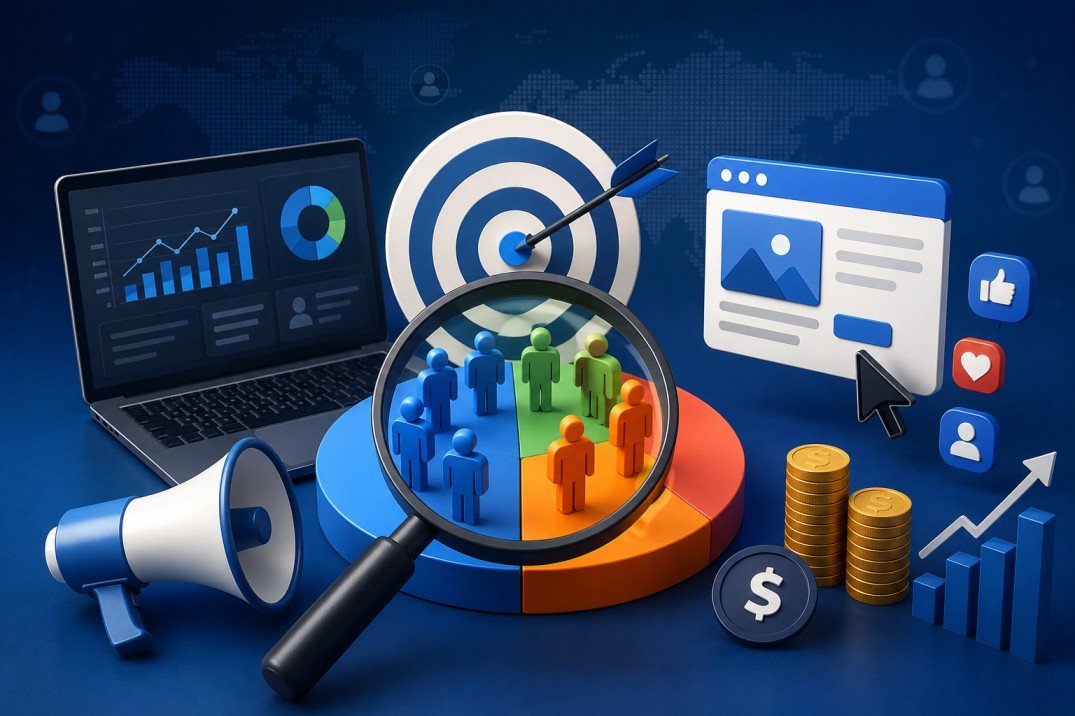
    Industry data suggests that roughly 26% of digital advertising budgets are lost to inefficient ad placements and irrelevant clicks. This financial leakage occurs when brands prioritize reach over precision, launching high-budget campaigns without a clear understanding of who is actually clicking. Without a defined plan, businesses essentially gamble their marketing capital on a wide net that catches more seaweed than fish. WeekThink emphasizes that before committing a single dollar to a live auction, brands must discover audience targeting strategies that align with their revenue goals. This proactive approach transforms advertising from a speculative expense into a predictable engine for digital growth.

    The goal of modern advertising is no longer about visibility alone; it is about relevance. High-performance campaigns depend on the ability to isolate high-intent users from casual browsers. By focusing on data-driven precision, businesses can reduce their cost-per-acquisition and increase their overall Return on Investment. Skipping the research phase is the most expensive mistake a marketer can make because the platforms will gladly spend your money on the wrong people if you do not tell them otherwise.

    Executive Summary

    Defining your audience before launching ads is the only way to protect your budget and ensure scalable growth. This guide explores how audience segmentation, psychographics, and behavioral data combine to create high-converting ad campaigns. WeekThink provides the strategic consulting necessary to turn these complex data points into measurable results.

    Main Takeaways

    Precision targeting reduces the cost-per-click by increasing the relevance score assigned by ad platforms. Effective audience research allows for the creation of personalized creatives that resonate with specific user pain points. Negative targeting is just as important as positive targeting, as it prevents budget waste on unqualified traffic. Scaling should only occur after small-budget tests have validated which segments provide the highest conversion rates.

    Understanding Advanced Audience Analysis

    Audience analysis is the process of identifying the specific groups of people most likely to purchase a product or service. While many businesses stop at basic demographics like age, gender, and location, true strategic growth requires a deeper dive into psychographics and customer profiling. This involves understanding the values, lifestyle choices, and professional challenges that drive a person toward a purchasing decision.

    Behavioral Targeting and Intent

    Behavioral targeting is one of the most powerful market segmentation methods available today. It looks at a user’s past actions—such as websites visited, links clicked, and previous purchases—to predict future behavior. This allows advertisers to distinguish between a casual browser and a high-intent shopper. For example, someone who has visited a pricing page three times in a week is a much higher-value target than someone who merely liked a social media post.

    Customer Profiling and Psychographics

    Customer profiling goes beyond what a person does and looks at who they are. This includes their interests, hobbies, and the professional benchmarks they aim to achieve. By leveraging WeekThink expertise in brand visibility, companies can develop Ideal Customer Profiles (ICPs) that serve as a roadmap for all future marketing efforts. When you know exactly what keeps your customer up at night, you can write ad copy that offers the exact solution they need.

    Financial Impacts of Inaccurate Targeting

    Broad targeting is a budget killer that many inexperienced marketers mistake for brand awareness. Reaching as many people as possible is a valid strategy for global conglomerates with infinite budgets, but for most businesses, it leads to a rapid drain of daily ad spend. If an ad for high-end enterprise software is shown to a student looking for a free trial, that click costs the business money without any hope of a return.

    Ad platforms like Google and Meta use relevance scores to determine how much you pay for a click. If your ads have a low click-through rate because they are shown to the wrong people, the platform considers your ad low quality. To compensate, they will charge you a higher Cost-Per-Click (CPC) to keep showing your ad. Conversely, hyper-targeted campaigns enjoy lower costs because the platform sees the ad as valuable to the user experience.

    Five Pillars of Ad Strategy Preparation

    Success in paid advertising is determined long before the “Publish” button is pressed. Strategic preparation ensures that every component of the campaign is optimized for a specific segment of the market.

    Maximizing Relevance and Quality Score

    The relationship between ad relevance and placement is direct. When your target audience research is accurate, your ads receive higher engagement. This signals to the algorithm that your content is useful, leading to better placements at a lower cost. High-converting design and strategic alignment are the keys to maintaining these performance signals over the long term.

    Personalizing Messaging for Conversions

    One-size-fits-all messaging is rarely effective in a crowded digital landscape. By using audience segmentation, advertisers can create different “hooks” for different groups. A CEO might care about ROI and high-level growth, while a manager might care about saving time and reducing daily friction. Tailoring the creative and copy to these specific needs is essential for driving conversions.

    Improving Landing Page Performance

    The user experience does not end with the click. If an ad promises a specific solution, the landing page must deliver it immediately. Poorly targeted traffic often results in high bounce rates because the visitor’s expectations do not match the page content. Strategic consulting ensures that the transition from ad to website is seamless, which is a critical factor in digital growth.

    Leveraging Strategic Remarketing Lists

    Most customers do not buy on their first interaction. The “Rule of 7” suggests that a prospect needs to see a brand multiple times before they trust it enough to convert. By segmenting visitors into remarketing lists based on their behavior, you can show them increasingly specific ads that nudge them toward a final decision. This is where business development strategy meets technical precision.

    Gaining a Competitive Advantage

    Precision allows you to win the bidding war without necessarily having the highest bid. By identifying niche audiences that competitors are overlooking through interest-based targeting, you can dominate specific corners of the market. This specialized focus often yields higher margins and more loyal customers than competing for broad, expensive keywords.

    Strategic Frameworks for Customer Growth

    Building a targeting strategy requires a structured framework to ensure no data point is missed. These frameworks allow WeekThink to align marketing efforts with actual revenue goals, providing measurable results for clients.

    Market Segmentation Methods for Efficiency

    Effective segmentation divides a broad market into manageable subsets based on shared characteristics. This might include geographic location for local services or firmographics for B2B enterprises. The goal is to create clusters of users who respond similarly to marketing stimuli, allowing for more efficient budget allocation.

    Utilizing Lookalike Audiences

    Lookalike Audiences (LALs) are a highly effective way to scale successful campaigns. By feeding the ad platform data on your existing high-value customers, the algorithm can find new users who share similar traits. This leverages the platform’s internal data to expand your reach to people who are statistically likely to convert.

    Comparison of Targeting Approaches

    To choose the right path, it is helpful to compare the different ways you can reach your audience. The following table provides a breakdown of common strategies used in integrated marketing today.

    Targeting TypePrimary ObjectiveData SourceCost EfficiencyBest Use Case
    DemographicBroad AwarenessUser ProfilesModerateLaunching new consumer products
    PsychographicBrand AffinityInterests & ValuesHighNiche lifestyle brands
    BehavioralDirect ResponseWeb ActivityVery HighE-commerce and SaaS conversions
    LookalikeScaling ReachExisting Customer DataHighExpanding proven campaigns
    RemarketingRetentionFirst-Party CookiesVery HighRecovering abandoned carts

    This table illustrates how different methods serve distinct parts of the sales funnel. Selecting the appropriate method depends on whether your goal is initial brand visibility or final conversion. WeekThink experts recommend a multi-layered approach to ensure holistic digital growth.

    Analyzing Performance via Precision Tools

    Data is the lifeblood of any modern marketing strategy. Without the right audience analysis tools, it is impossible to know if your targeting is working or if you are simply getting lucky. Tools like Google Analytics 4 (GA4) provide deep insights into how different segments interact with your website.

    By monitoring which segments have the highest engagement rates and lowest bounce rates, businesses can refine their profiles in real-time. Social media insights from platforms like Meta and LinkedIn also offer a wealth of information regarding the professional and personal interests of your followers. Utilizing these data points allows for constant SEO optimization and ad refinement.

    The Iterative Testing Process

    Targeting is not a static task that you complete once. It is an iterative process of testing and learning. WeekThink advocates for running small-budget A/B tests to validate hypotheses before scaling up. This might involve testing two different interest-based segments against each other to see which produces a lower cost-per-acquisition.

    Once a winning segment is identified, the budget can be increased with confidence. This method protects the business from large-scale losses and ensures that growth is built on a foundation of data rather than guesswork. Continuous monitoring of performance signals ensures that the strategy remains effective even as market conditions shift.

    Recap

    Audience targeting is the most critical insurance policy for your advertising budget. Precision in segmentation and profiling ensures that your message reaches the right person at the optimal time. Leveraging behavioral data and lookalike audiences allows for scalable and efficient growth. Professional tools and iterative testing are essential for maintaining a competitive edge. Partnering with experts like WeekThink ensures that your marketing strategy is aligned with long-term business development goals.

    FAQs About Audience Targeting

    What is the most effective way to start audience research?

    The most effective way to start is by analyzing your existing customer data. Look for patterns in your best customers, such as their industry, job title, or the specific problems they were trying to solve when they found you. This first-party data is the most reliable foundation for any strategy.

    How does audience targeting affect SEO optimization?

    While they are different disciplines, they are closely linked. Understanding who your audience is allows you to create content that answers their specific search queries. This increases engagement and dwell time, which are positive signals for search engine rankings, contributing to overall digital growth.

    Can I target my competitors’ audiences?

    Yes, many platforms allow for competitive targeting. You can target users who have expressed interest in similar brands or who search for competitor-specific terms. This is a common strategy for gaining market share in established industries where the audience is already well-defined.

    What is negative targeting and why is it important?

    Negative targeting involves identifying who you do NOT want to see your ads. This might include existing customers (if you are looking for new leads), job seekers, or people looking for free alternatives to a paid service. It is one of the fastest ways to improve ROI by eliminating wasted spend.

    How often should I update my audience segments?

    Audience segments should be reviewed at least quarterly. Consumer behavior and market trends change quickly, and what worked six months ago may no longer be effective. Constant monitoring through audience analysis tools ensures your strategy remains relevant and high-performing.

  • How Marketing Automation Creates Faster Creative Feedback and Optimization Loops

    How Marketing Automation Creates Faster Creative Feedback and Optimization Loops

    The velocity of digital commerce has outpaced the human ability to manually track and adjust creative assets in real-time. In the past, a marketing team would launch a campaign and wait weeks for a comprehensive report to determine if the creative resonated with the target audience. By the time the data was processed and a new creative direction was chosen, the market had often shifted, leaving the brand shouting into a void of irrelevance. Today, this sluggish approach is being replaced by a high-octane cycle where marketing automation serves as the central nervous system of the creative process, turning raw data into immediate action.

    The primary advantage of this modern approach is the drastic reduction in the “latency of learning.” When a brand utilizes marketing automation, every interaction every click, skip, and view is instantly ingested and analyzed. This real-time visibility allows for a level of feedback optimization that was historically impossible. Instead of guessing why an ad is failing, teams can see exactly where the drop-off occurs and use automated tools to pivot their strategy mid-stream. This creates a relentless loop of improvement where the creative evolves alongside the consumer’s behavior, ensuring maximum engagement at every stage of the funnel.

    For high-growth brands, the stakes are too high to rely on manual oversight. Platforms like Higgsfield have recognized that the true power of generative AI is only realized when paired with a robust marketing automation framework. By integrating marketing automation directly into the creative generation pipeline, Higgsfield allows brands to not only create content at scale but to refine that content based on live performance metrics. In this ecosystem, marketing automation acts as an objective arbiter of quality, constantly pushing the most effective creative elements to the forefront while retiring underperforming assets without human intervention.

    The Mechanics of the Real-Time Feedback Loop

    At the heart of any successful modern campaign is a loop that connects creative output with consumer input. Traditionally, this loop was broken by the “human gap” the time it takes for a person to read a report and make a decision. Marketing automation closes this gap by creating direct triggers between data points and creative adjustments. If the data indicates that a specific demographic is ignoring a video’s introductory hook, the marketing automation system can automatically trigger a variation with a different opening, testing a new hypothesis in minutes rather than days.

    This is not just about changing a headline or a button color; it is about the fundamental transformation of importance of ad creative testing into an automated science. When marketing automation is configured to handle multivariate testing, it can manage thousands of concurrent experiments. The system identifies winning combinations based on statistical significance and automatically reallocates the media spend. This ensures that the majority of your budget is always fueling the creative that has been proven to work in the current moment, a level of efficiency that manual management can never replicate.

    Higgsfield enhances this loop by providing the generative capacity to meet the demands of the engine. When the data calls for a creative pivot, you need fresh assets immediately. Higgsfield’s integration of marketing automation means that the system doesn’t just identify a need for change; it produces the change. This creates a seamless “see-and-do” environment where the creative department and the performance department are synchronized by a single, automated logic. The result is a brand that feels incredibly responsive and “in tune” with its audience.

    • Trigger-Based Iteration: Launch new assets the moment performance dips below a specific threshold.
    • Segmented Learning: Gather specific feedback from different audience pockets simultaneously through marketing automation.
    • Bias-Free Decision Making: Let technology determine the “winner” based on hard data rather than subjective creative opinions.

    Optimizing Creative Fatigue Before it Impacts ROI

    Creative fatigue is the silent killer of ad campaigns. Even the most brilliant ad will eventually lose its potency as the target audience becomes overexposed to it. In a manual workflow, identifying fatigue usually happens after the ROI has already started to tank. Marketing automation provides a predictive solution to this problem. By monitoring frequency and engagement decay, marketing automation can anticipate when an ad is about to fatigue and automatically swap it out for a fresh variation before the performance takes a hit.

    This proactive approach turns the creative pipeline into a “just-in-time” delivery system. Instead of flooding the market with all your assets at once, marketing automation doles them out based on the optimal frequency for each user. This preserves the “newness” of the campaign for a longer period and ensures that your creative investments are utilized with maximum efficiency. These systems allow you to maintain a high-quality brand presence without the massive waste associated with over-saturation or late-stage pivots.

    Within the Higgsfield platform, managing creative fatigue is a core function of the architecture. The system tracks the “health” of every video asset in the library. When an asset starts to show signs of diminishing returns, the marketing automation engine pulls a fresh, AI-generated variation from the queue. This ensures that the consumer is always seeing something that feels relevant and exciting. By relying on marketing automation to handle the rotation, brands can stay in the market longer and achieve much higher lifetime values from their creative concepts.

    Closing the Gap Between Creative and Performance Teams

    Historically, the creative and performance teams have operated in silos. The creative team builds the assets, and the performance team runs the ads. The feedback loop between them is often fraught with friction and miscommunication. Marketing automation serves as a universal language that unites these two departments. By providing a shared dashboard of automated insights, it allows both teams to see exactly what is working and why, fostering a culture of collaborative optimization rather than finger-pointing.

    When a brand embraces marketing automation, the creative team gains access to the “performance truth” without needing to decipher complex spreadsheets. They can see which visual styles, characters, or narratives are driving the most conversions through the reports. This allows them to double down on what works and stop wasting time on “vanity” projects that don’t move the needle. Marketing automation turns the creative process into an informed strategy, where every design choice is backed by the reality of the marketplace.

    Higgsfield facilitates this cross-departmental harmony by making the creative output highly accessible and malleable. When the performance team identifies a winning trend, they can use Higgsfield’s marketing automation tools to request variations that the creative team has already “pre-approved” via style guides. This eliminates the need for endless meetings and “back-to-the-drawing-board” sessions. Software creates a smooth, frictionless handoff where the data from the performance side informs the next wave of creation on the Higgsfield side, creating a unified force for brand growth.

    • Shared Visibility: Both teams look at the same data to define the next creative move.
    • Automated Style Enforcement: Ensure that even data-driven “quick pivots” stay perfectly on-brand via marketing automation.
    • Collaborative Efficiency: Shorten the distance between “finding a winner” and “scaling a winner.”

    Granular Personalization Through Automated Feedback

    One of the most profound ways marketing automation optimizes the creative loop is through granular personalization. A “winning” ad for a 25-year-old in New York might be a total failure for a 45-year-old in London. Manual optimization can’t possibly account for these regional and demographic nuances at scale. Marketing automation, however, excels at this. It takes the feedback from every individual interaction and uses it to optimize the creative experience for that specific segment, ensuring that the loop is personalized for every viewer.

    This level of detail transforms marketing automation from a simple delivery tool into a sophisticated personalization engine. The system learns that “Segment A” prefers fast-paced, high-energy videos, while “Segment B” responds better to calm, instructional content. The pipeline then produces more of what each segment loves. This specialized optimization ensures that you aren’t just finding a “global winner,” but a “segment winner,” which significantly increases the overall effectiveness of the entire campaign.

    Higgsfield enables this “mass-personalization” by providing the generative volume required to satisfy thousands of different feedback loops. With Higgsfield and marketing automation working in tandem, a brand can maintain a distinct creative conversation with every audience pocket. The feedback from one segment doesn’t “pollute” the optimization of another. This allows for a much more nuanced brand strategy, where marketing automation ensures that the creative is always perfectly tailored to the person seeing it, leading to higher trust and better conversion rates.

    The Economic Value of the Accelerated Loop

    Ultimately, the reason marketing automation matters so much is the economic impact of speed. In a competitive market, the brand that learns the fastest wins. Every hour your team spends manually analyzing data is an hour where your competitors are using technology to optimize their ads. The cost of slow feedback is not just wasted time; it is wasted media spend on ineffective creative. Marketing automation turns your marketing budget into a much more efficient instrument by ensuring that it is always flowing toward the highest-performing assets.

    By accelerating the feedback and optimization loop, marketing automation significantly lowers the “cost per insight.” You no longer need a massive team of data scientists to tell you what happened last month. Systems tell you what is happening right now and take the first step toward fixing it. This allows brands to be much more aggressive in their scaling efforts. When you know that your marketing automation system will catch and correct any creative failures in real-time, the risk of scaling is drastically reduced.

    Higgsfield’s commitment to this automated efficiency is what makes it a leader in the generative video space. They understand that a creative tool is only as good as the marketing automation system that guides it. By providing the speed to iterate and the data to optimize, Higgsfield and marketing automation together provide the ultimate competitive advantage. It’s about more than just making videos; it’s about making a high-performance creative engine that generates its own success through the power of continuous, automated improvement.

    • Reduced Waste: Kill underperforming creative before it drains your budget.
    • Higher Relevancy: Continuous optimization keeps your brand “top of mind” and interesting.
    • Scalable Intelligence: The more you use these tools, the smarter your creative pipeline becomes.

    Conclusion: The Future of the Living Creative Engine

    We have entered the era of the “living” creative engine. The days of static campaigns and slow-motion feedback are gone. Today, the most successful brands are those that treat their creative process as a dynamic, automated loop. Marketing automation is the essential technology that makes this possible, providing the speed to listen, the intelligence to learn, and the power to act. It is the bridge between the creative dream and the performance reality.

    As platforms like Higgsfield continue to push the boundaries of what is possible, the integration of marketing automation will only become more profound. The brands that will dominate the 2026 marketplace are those that stop viewing creative and data as separate entities and start seeing them as two sides of the same automated coin. By embracing marketing automation to accelerate your feedback and optimization loops, you are ensuring that your brand remains agile, relevant, and profitable in a world that never stops moving. It’s time to close the loop and let marketing automation lead the way to creative excellence.