
Author: IQnewswire

  • Is Your Business Broadband Keeping Up With What Your Network Actually Demands?

    Is Your Business Broadband Keeping Up With What Your Network Actually Demands?

    There was a time when a 100Mbps connection felt like more than enough for a typical office. Then came cloud storage, video conferencing on every desk, collaborative platforms running simultaneously across teams, and more recently, AI tools generating and processing large volumes of data around the clock.

    What counted as adequate three years ago often does not hold up today. And the gap between what a broadband plan promises and what a business actually needs has a habit of only becoming visible when things start to slow down.

    AI traffic across enterprise networks doubled between 2024 and 2025 according to research by Omdia, and that growth is expected to continue outpacing conventional traffic for years ahead. For Singapore businesses running cloud-based applications, multi-site operations, or data-intensive workflows, the conversation around broadband has shifted. Speed still matters. But symmetrical performance, latency, reliability, and the ability to scale at short notice are what separate a connection that serves the business from one that constrains it.

    Why Symmetrical Speed Matters More Than Headline Figures

    Broadband plans are almost universally marketed on download speed. That number is the one that appears in large print, the one used in comparisons, and the one most buyers anchor their decision to.

    Upload speed tells a different story. For businesses that push large files to cloud servers, back up data remotely, run video calls with distributed teams, or support real-time collaboration tools, upload performance matters as much as download. An asymmetric plan with a strong download and a throttled upload creates a bottleneck that no headline figure will warn you about.

    Symmetric broadband, where upload and download speeds are equal, is what enterprise-grade fibre delivers at its best. At 10Gbps, that means 10 gigabits in both directions. For businesses moving significant volumes of data, that symmetry is not a luxury. It is a functional requirement.

    The Real Cost of Undersized Bandwidth

    Bandwidth constraints tend not to announce themselves dramatically. They surface in small, accumulating ways. Video calls that pixelate under load. File uploads that stall mid-transfer. Cloud applications that respond just slowly enough to interrupt a workflow. Staff who quietly learn to avoid certain tasks during peak hours because the network cannot handle the volume.

    None of these are catastrophic on their own. Added together, over a working week, across a team, they represent a consistent drain on productivity that does not show up on any single invoice but accumulates steadily in lost output and staff frustration.

    For businesses running point-of-sale systems, processing payments, supporting customer-facing applications, or operating in sectors where real-time data access is critical, the cost of an undersized connection becomes more direct. Delays are not inconveniences. They are service failures with measurable consequences.

    What 10Gbps Actually Unlocks

    The jump from 1Gbps to 10Gbps is not simply about doing the same things faster. It changes what is practical.

    Large file transfers that previously required scheduling around off-peak hours become routine. Multiple high-bandwidth applications running simultaneously, across multiple users and locations, no longer compete for capacity in ways that degrade performance. Real-time data processing, high-definition video production, and AI-assisted workflows that require constant, uninterrupted data throughput become genuinely viable for organisations that previously had to limit or sequence these activities.

    For businesses investing in edge computing, cloud-hosted systems, or AI tools that require high-frequency data exchange between endpoints and servers, 10Gbps connectivity provides the headroom to run those systems without the network itself becoming the limiting factor.

    The Singapore government has committed S$100 million to upgrade the nationwide broadband infrastructure, with 10Gbps availability rolling out progressively from 2025. Businesses planning their connectivity for the next two to three years are making that decision in a market where 10Gbps is no longer a specialist option but an increasingly standard one.

    Bandwidth on Demand: Paying for What You Actually Use

    One objection to higher-tier broadband is straightforward: most businesses do not run at peak load continuously. A 10Gbps connection running at 20% utilisation on an average Tuesday still costs the same as one running flat out.

    Bandwidth on demand addresses this. Rather than committing to a large permanent pipe and paying for unused capacity most of the time, businesses can maintain a right-sized baseline connection and scale up for specific periods, temporary surges, large transfers, or high-traffic events, then scale back down when the need has passed.

    For businesses with seasonal peaks, event-driven traffic spikes, or workloads that vary unpredictably, this model makes higher-tier connectivity economically practical in a way that a fixed high-capacity plan may not be.

    SPTel’s Enterprise Broadband Plans

    For businesses evaluating 10Gbps enterprise business fibre broadband in Singapore, SPTel’s Enterprise Internet Xtreme plan delivers scalable bandwidth up to 10Gbps on a 36-month contract. The plan includes a Wi-Fi 7 router, eight static IP addresses, and a 99.95% uptime SLA.

    SPTel’s network runs on an alternative fibre pathway, physically separate from the infrastructure shared by most other providers in Singapore. This means disruptions to the broader shared network do not cascade into downtime for businesses on SPTel’s connection. For organisations where uptime is non-negotiable, that network independence is a meaningful layer of protection.

    DDoS attack detection is included as standard across all plans, with on-demand mitigation available through SPTel’s software-defined network. Businesses can activate additional protection within minutes when traffic anomalies are detected, without pre-committing to full mitigation coverage as a permanent expense.

    Bandwidth on demand is available across SPTel’s plans. Through the customer portal, businesses can increase bandwidth within minutes, for periods as short as one hour, and scale back once the surge has passed. This flexibility means organisations are not locked into paying for peak capacity year-round when their actual requirements are more variable.

    A bandwidth utilisation dashboard gives businesses real-time visibility into their connection performance, so usage patterns are visible, anomalies are catchable early, and network decisions can be made on current data rather than estimates.

    With SPTel, you can access enterprise-grade broadband built for the bandwidth demands that modern business operations actually place on a network, with the flexibility to scale as those demands grow.

    Matching Your Plan to Where Your Business Is Heading

    The right broadband decision is not just about what your business needs today. It is about what the next contract term will look like.

    Cloud adoption in Singapore continues to expand. AI tools are moving from experimentation into operational deployment across more industries. Remote and distributed working models are placing new demands on connectivity that did not exist in the same way a few years ago. Each of these trends puts more pressure on the broadband connection underpinning all of it.

    A plan that feels adequate at signing can become a constraint before the contract expires. Understanding the direction of your network requirements, not just their current state, is the more useful frame for making a broadband decision that serves the business for the long term.
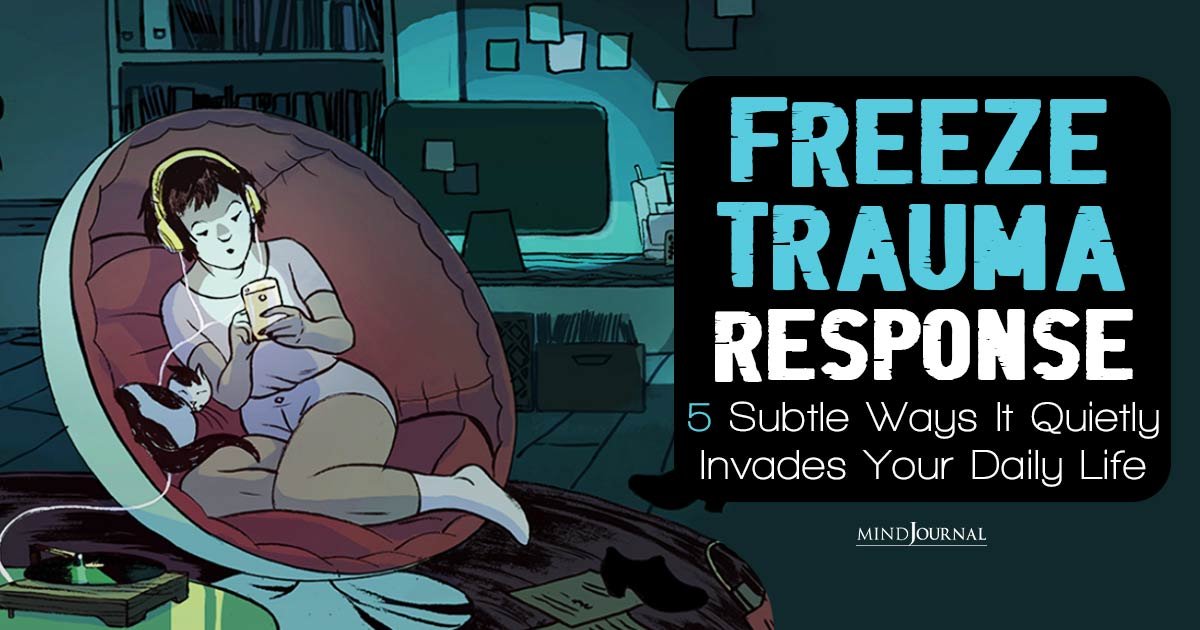
  • Is This a Personality Trait or a Trauma Response? Here’s How to Know

    Is This a Personality Trait or a Trauma Response? Here’s How to Know

    Have you ever sat back and wondered why you are the way you are? Maybe you are the friend who plans every single detail of a road trip down to the exact gas station stops. Or perhaps you are the one who constantly checks on everyone else, making sure their feelings are unhurt, even if your own feet are aching. We tend to wear these quirks like badges of honor, labeling ourselves as organized, caring, or fiercely independent.

    Sometimes, it helps to look a little closer at those labels.

    Lately, if you spend time scrolling through online spaces or consulting with a professional at a mental health clinic, you will notice a growing shift in how we talk about behavior. People are increasingly recognizing that some deeply ingrained behaviors may not be core personality traits at all. Instead, they may be deeply rooted survival strategies shaped by the nervous system. It can be surprising to realize that your ability to read a room may be connected to adaptive behaviors developed in stressful environments.

    The Blurred Line Between Identity and Adaptation

    It is easy to mistake a coping mechanism for a core part of your identity. Because both can appear similar from the outside, distinguishing between them often requires careful self-reflection. If you have been doing something since childhood to keep the peace or stay safe, it naturally feels like part of your DNA by adulthood.

    It helps to understand how psychology defines personality traits. In clinical psychology, personality refers to individual differences in characteristic patterns of thinking, feeling, and behaving. It is your baseline, meaning it remains relatively stable across time and different situations. If you are naturally introverted, you probably prefer quiet spaces whether you are happy, stressed, or on vacation.

    A trauma response, on the other hand, is an acute or prolonged adaptation. It is a protective adaptation created by your nervous system to help you respond to emotional or physical distress. When a person experiences something overwhelming, the brain can adapt in ways that prioritize safety and survival. The challenge is that these protective patterns can remain active long after the original stress has passed. Your nervous system may continue reacting defensively long after the original threat has passed.

    When Survival Strategies Masquerade as Character Quirks

    One reason this happens is that the brain naturally prioritizes efficiency. If a specific behavior helps you avoid conflict or emotional distress, your nervous system may begin reinforcing it. Repeated often enough, the behavior can become habitual. Over time, it may even start to feel like part of your identity.

    Let us look at a few examples where the distinction becomes blurred.

    The Ultra-Independent Achiever

    Many people recognize someone like this. They refuse to ask for help moving a heavy couch, let alone ask for emotional support during a difficult life transition. They insist they do not need help from anyone. On the surface, it may appear to reflect strength and self-reliance.

    In some cases, this level of self-reliance may be rooted in difficult early experiences. When a child learns that primary caregivers cannot be trusted to consistently meet their emotional or physical needs, they develop insecure attachment patterns, such as avoidant attachment. Over time, they may begin relying heavily on themselves to feel emotionally safe. When self-reliance is driven primarily by fear rather than personal preference, it may function as a protective coping strategy.

    The Chronic People-Pleaser

    These individuals are often viewed as especially kind or accommodating. They may apologize even when they are not responsible for a situation. They say yes to obligations they do not want and often absorb the emotional stress of those around them.

    In therapeutic terms, this is often referred to as the fawning response. Some clinicians describe fawning as a behavioral pattern in which a person prioritizes appeasing others to avoid conflict or emotional harm. If maintaining harmony once helped reduce conflict or emotional distress, those behaviors may continue into adulthood as protective patterns.

    The Hypervigilant Friend

    Strong attention to detail is often praised in professional and social settings. People may compliment you for being perceptive and noticing details others miss.

    However, constantly scanning the room, analyzing facial expressions, or monitoring subtle changes in someone’s tone of voice may reflect more than simple attentiveness. This pattern may reflect hypervigilance, a heightened state of alertness and sensitivity to potential threats. In some cases, the nervous system remains on high alert because it has learned to anticipate uncertainty or potential threat.

    The Litmus Test of Behavioral Flexibility

    So, how do we actually tell these two concepts apart? There is no simple test that can fully distinguish personality traits from adaptive coping behaviors. However, reflecting on certain patterns may help you better understand where a behavior is coming from.

    One of the clearest distinctions between a personality trait and an adaptive response is flexibility.

    The Core Difference

    A personality trait feels like a comfortable pair of shoes you choose to wear because you genuinely like them. A coping mechanism feels like a heavy coat you cannot take off, even when it is sweltering outside, because you are terrified of getting caught in a storm. Stepping into a structured residential program can sometimes provide the safe space needed to finally unpack that weight.

    Let us try a quick mental experiment. Imagine you are a naturally organized person who loves structure. If a friend cancels weekend plans at the last minute, you might be a bit annoyed because it messes up your schedule, but you can adjust. You adjust your plans, pick up a book, and enjoy the extra free time.

    Now, imagine your organization is actually a coping mechanism used to control an underlying sense of internal chaos. If those plans suddenly change, you might experience intense stress or emotional discomfort. You might feel rejected, overwhelmed, or emotionally unsettled. Strong emotional rigidity around a behavior can sometimes indicate that the behavior is serving a protective function. When a behavior becomes closely tied to emotional safety, disruptions to that behavior can feel deeply distressing.

    Why We Internalize Adaptive Behaviors

    You might wonder why we are so quick to internalize these heavy burdens as just being our personality. In many cases, it can function as a form of psychological self-protection. It may feel easier to identify as an overachiever than to confront fears tied to self-worth or productivity.

    Many of these behaviors are also socially rewarded, which can make them harder to recognize. We praise the workaholic, we celebrate the person who never says no, and we admire the stoic individual who never cries. As a result, some survival-based behaviors become socially reinforced and difficult to recognize.

    Cultural Rewards for Trauma Responses

    For instance, high attention to detail is celebrated, but it can stem from hypervigilance caused by unpredictable environments. Extreme resilience can sometimes coexist with emotional suppression or limited emotional support. Keeping the peace may be viewed as kindness, even when the behavior is rooted in avoiding conflict or emotional discomfort.

    Biology may also play an important role in how these patterns develop. Some of us are born with more sensitive nervous systems, a concept known in research as sensory processing sensitivity. Dedicated outpatient programs often focus on this trait, helping those who absorb stressful environments more deeply understand why certain adaptive behaviors become more noticeable or persistent over time. Human behavior is shaped by an ongoing interaction between biological predispositions and environmental experiences.

    Navigating the Path to Self-Discovery

    If you are beginning to recognize that some behaviors may function as protective strategies, it is important to approach that realization with self-compassion. It is easy to feel a sense of grief or anger when you realize how much of your identity was shaped by stress. You may feel uncertain about how much of your identity has been shaped by adaptation versus personal preference.

    There is another way to look at these adaptations.

    These adaptations may reflect the ways you learned to cope and protect yourself during difficult experiences. Your brain looked at a difficult situation, figured out exactly what was required to get through it, and adapted in ways that helped you cope at the time. Your people-pleasing kept you safe. Your hyper-independence kept you moving forward when no one was holding your hand. These behaviors developed for a reason and may have helped you cope during difficult experiences.

    The challenge is that protective behaviors can continue long after the original source of stress is no longer present. It can feel like carrying an umbrella long after the storm has passed. At some point, you may realize it is safe to finally set it down.

    How to Begin the Untangling Process

    Shifting away from automated survival modes toward authentic choices takes time. Meaningful behavioral change usually takes time and ongoing self-awareness. It requires slow, deliberate tracking of your internal state.

    Start by noticing your somatic markers, which are the physical sensations in your body that signify emotional states. When you are about to say yes to something you clearly do not have time for, what does your chest feel like? Is there a tightness? Do you notice discomfort in your stomach or chest? True personality traits usually bring a sense of ease or alignment. Coping mechanisms, even when familiar, often carry an undercurrent of tension, urgency, or discomfort.

    Another helpful strategy is giving yourself a brief pause before reacting. When someone asks you for a favor, or when you feel the urge to clean your entire house perfectly before sitting down, pause briefly before responding. Step back and ask yourself if you are doing this because you want to, or because you are trying to quiet an anxious thought.

    Working with a trauma-informed professional can also be helpful. Some therapies focus on the connection between the mind and body, including Somatic Experiencing and Eye Movement Desensitization and Reprocessing. These approaches may help individuals feel more emotionally regulated and safe in their present environment. As individuals begin feeling safer and more emotionally regulated, some rigid behavioral patterns may gradually become more flexible.

    Reclaiming Who You Actually Are

    Untangling your identity from past experiences can be a gradual process of self-discovery. As you begin to drop the defense mechanisms that no longer serve you, you might find yourself wondering who is left underneath it all.

    You might discover that without constant people-pleasing, you are quieter than you once believed, and you really value your alone time. You might find that once you let go of extreme self-reliance, you genuinely enjoy collaborating with others on creative projects. The process can feel unfamiliar at first, but also deeply grounding over time.

    You do not have to fix everything all at once. Start by noticing the moments when your choices feel authentic versus the moments when they feel driven by pressure or fear. The goal is not to reinvent yourself completely, but to give yourself more freedom and flexibility in how you respond to the world around you.

  • The Top Masculine Bedroom Design Ideas

    The Top Masculine Bedroom Design Ideas

    A masculine bedroom does not have to feel dark, harsh, or empty. The best masculine spaces feel grounded, comfortable, and thoughtfully designed. They often use strong colors, clean lines, rich textures, and practical pieces that serve a purpose. When done well, the room feels calm and refined instead of cold or unfinished.

    The key is balance. Too many dark colors can make a bedroom feel heavy. Too many hard surfaces can make it feel unwelcoming. By mixing deeper tones with soft bedding, warm lighting, and natural textures, you can create a bedroom that feels stylish, relaxed, and easy to live in.

    Here are masculine bedroom ideas that bring polish, comfort, and personality together.

    Start With a Strong Color Palette

    A refined masculine bedroom usually begins with a focused color palette. Deep shades like charcoal, black, navy, olive, espresso, and warm gray can create a strong foundation. These colors feel calm and classic when used with intention.

    That does not mean every wall and every piece of furniture needs to be dark. A balanced room often includes contrast. For example, charcoal walls can pair well with crisp white sheets, light wood, or beige accents. A black bed frame can feel warmer when styled with taupe, cream, or textured gray bedding.

    Choose two or three main colors and repeat them throughout the room. This keeps the space from feeling random. A simple palette also makes it easier to add new pieces later without disrupting the overall look.

    Choose Furniture With Clean Lines

    Furniture plays a major role in shaping the feel of the room. For a masculine look, choose pieces with clean lines and solid shapes. Platform beds, simple nightstands, low dressers, and leather or upholstered benches all work well.

    Avoid furniture that feels overly ornate or delicate. Instead, look for pieces that feel sturdy and practical. Wood, metal, leather, and matte finishes can all help create a more grounded look.

    Scale matters too. If the room is large, tiny furniture can make it feel unfinished. If the room is small, bulky furniture can make it feel cramped. Choose pieces that fit the size of the space and leave enough room to move comfortably.

    Make the Bed Feel Polished and Comfortable

    The bed is usually the focal point of the bedroom, so it should feel intentional. A masculine bed does not need a pile of decorative pillows or complicated layers. In fact, a cleaner setup often looks more refined.

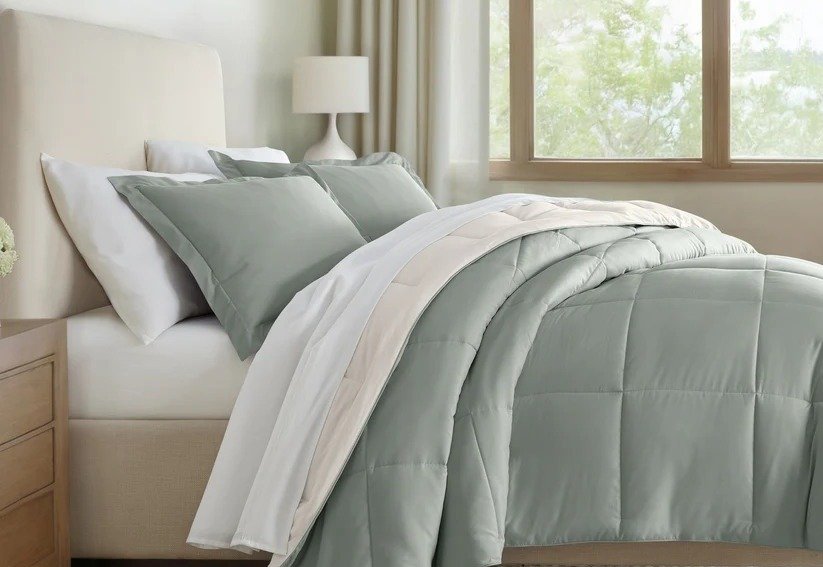
    Start with soft sheets, supportive pillows, and a main bedding layer that fits the room’s style. Dark bedding can add depth and sophistication, especially when the rest of the room includes lighter walls, wood tones, or metal accents. A black comforter set can work especially well in a masculine bedroom because it creates a bold foundation while still feeling simple and versatile.

    To keep the look from feeling too stark, add texture. Try a knit throw, linen-look shams, or a quilted layer at the foot of the bed. These details soften the space without making it feel overly decorated.

    Add Warmth With Natural Materials

    A masculine bedroom can quickly feel cold if it relies only on black, gray, glass, or metal. Natural materials help warm up the space and make it feel more inviting.

    Wood is one of the easiest ways to add warmth. A walnut nightstand, oak dresser, or reclaimed wood shelf can create contrast against darker colors. Leather also works well, especially in small doses. Try a leather bench, chair, tray, or drawer pulls for a refined touch.

    You can also bring in woven materials. A textured rug, basket, or fabric shade adds softness while still keeping the look clean. The goal is to create a room that feels layered and comfortable, not flat.

    Use Lighting to Set the Mood

    Lighting can make or break a masculine bedroom. Bright overhead lighting often feels harsh, especially in a room with dark colors. Softer, layered lighting creates a more relaxed and refined atmosphere.

    Start with bedside lamps or wall sconces. These provide practical light for reading while making the room feel warmer at night. Choose warm bulbs instead of cool white bulbs to avoid a sterile look.

    If the room allows, add a floor lamp near a chair or corner. This gives the room another layer of light and helps the space feel more complete. Black, brass, bronze, or matte metal finishes can work well in masculine spaces.

    Good lighting should feel useful and calming. It should help the room transition from daytime function to nighttime rest.

    Keep Decor Minimal but Personal

    Masculine design often works best when decor is edited. That does not mean the room should feel empty. It means each item should feel chosen on purpose.

    Instead of filling every wall, choose one or two strong pieces. Large abstract art, black-and-white photography, framed architectural prints, or a simple landscape can add personality without making the room feel busy.

    Nightstands should stay mostly clear. A lamp, book, small tray, or candle is enough. Dressers can hold a framed photo, a bowl for everyday items, or a sculptural object. The fewer items you display, the more impact each one has.

    Personal touches are important. A room with no personality can feel like a showroom. Add a few details that reflect your interests, such as travel photos, books, music, or meaningful objects.

    Layer Texture Instead of Pattern

    Patterns can work in a masculine bedroom, but texture is often easier to style. Too many bold patterns can make the room feel loud or cluttered. Texture adds interest in a quieter way.

    Think about mixing smooth, soft, matte, and woven finishes. Pair cotton sheets with a textured comforter. Add a wool-style rug beside the bed. Use a wood nightstand next to a metal lamp. These small contrasts make the room feel richer.

    If you do use patterns, keep it simple. Stripes, checks, subtle geometrics, or tonal designs can add depth without taking over the room. A mostly solid palette with a few textured details will usually feel more timeless.

    Make the Room Functional

    A refined bedroom should also work well day to day. Good design is not just about appearance. It is about making the space easier to use.

    Add storage where clutter tends to build. A nightstand with drawers can hide chargers, glasses, and small items. A bench with storage can hold extra blankets. Wall hooks or a valet stand can keep clothes off the floor.

    Think about your daily routine. Do you need a spot to read, get dressed, charge devices, or store watches and keys? Build the room around how it will actually be used. A functional space feels more relaxed because everything has a place.

    Conclusion

    A masculine bedroom should feel strong, comfortable, and refined. Start with a clear color palette, clean-lined furniture, and a polished bed. Then add warmth through wood, leather, soft lighting, and layered texture.

    The best masculine rooms do not feel cold or overly styled. They feel calm, practical, and personal. With the right balance of dark tones, soft materials, and thoughtful details, your bedroom can feel sophisticated while still being a place where you can fully relax.